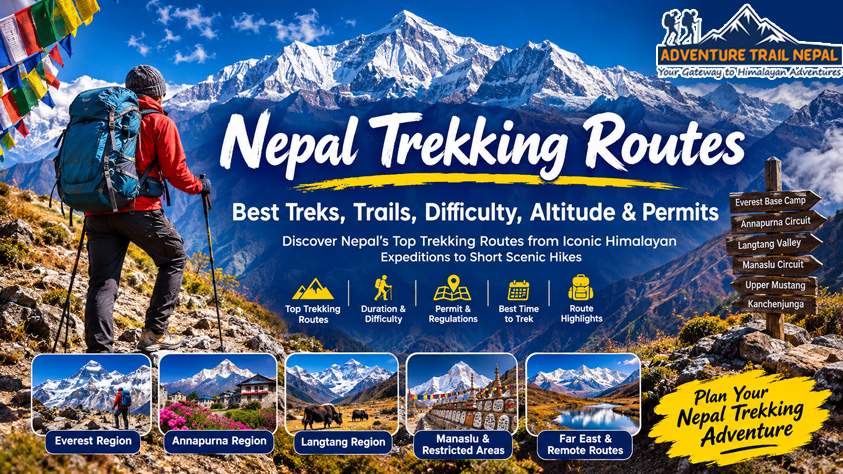
Nepal is one of the world’s premier trekking destinations, offering an extraordinary variety of trails through the Himalayas. From the legendary Everest Base Camp Trek and spectacular Annapurna Circuit to remote adventures in Kanchenjunga, Makalu, Dolpo, and Dhaulagiri, Nepal trekking routes offer something for almost every type of trekker.
Whether you are looking for a short Himalayan trek, a moderate cultural journey, a high-altitude adventure, or a challenging remote expedition, Nepal has trekking routes to match your time, experience, and interests.
This guide to Nepal trekking routes covers the most popular and important trails, including their approximate duration, highest points, difficulty, highlights, and permit considerations.
Overview of Nepal Trekking Routes
Nepal’s trekking trails pass through some of the world’s most spectacular mountain landscapes. Depending on the route, trekkers can experience lush forests, terraced hillsides, traditional mountain villages, Buddhist monasteries, alpine lakes, glaciers, high mountain passes, and dramatic Himalayan peaks.
The best trekking route for you depends on several factors:
Some treks can be completed in 4–7 days, while remote Himalayan routes can require three to four weeks or more.
The Everest region is home to Mount Everest and some of the most famous trekking trails in the world. Treks in the Khumbu combine spectacular Himalayan scenery with Sherpa culture, Buddhist monasteries, and iconic mountain villages.
Duration: Approximately 12–20 days
Maximum altitude: 5,364 m at Everest Base Camp
Difficulty: Moderate to challenging
The Everest Base Camp Trek is Nepal’s most famous trekking route. The trail passes through Namche Bazaar, Tengboche, Dingboche and Lobuche before reaching Everest Base Camp.

Duration: Approximately 11–13 days
Maximum altitude: Around 5,357 m at Cho La area/viewpoints depending on itinerary
Difficulty: Moderate to challenging
The Gokyo route offers spectacular views of Everest and the surrounding peaks while taking trekkers to the beautiful turquoise Gokyo Lakes. It is an excellent alternative to the classic Everest Base Camp route.

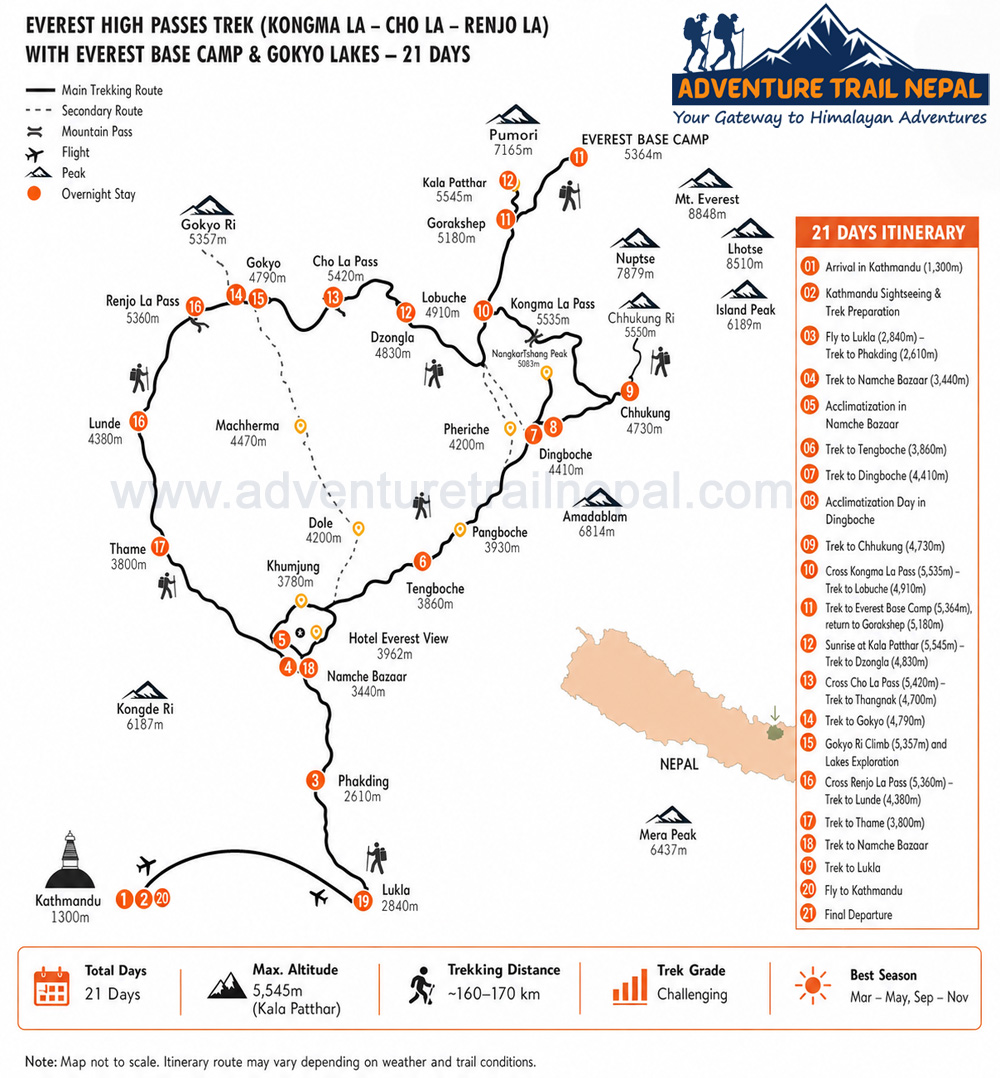
Duration: Approximately 18–20 days
Difficulty: Challenging to strenuous
High passes: Renjo La, Cho La and Kongma La
This is one of Nepal’s most challenging trekking routes. The trail crosses three high mountain passes and combines Everest Base Camp, Gokyo Lakes and remote Himalayan valleys.
Duration: Approximately 5–7 days
Difficulty: Easy to moderate
Pikey Peak is an excellent short trek for travelers who want spectacular Everest-region mountain views without committing to a long high-altitude trek.
The Annapurna region is among Nepal’s most diverse trekking destinations. Trails range from short and relatively easy hikes to demanding high-altitude crossings.
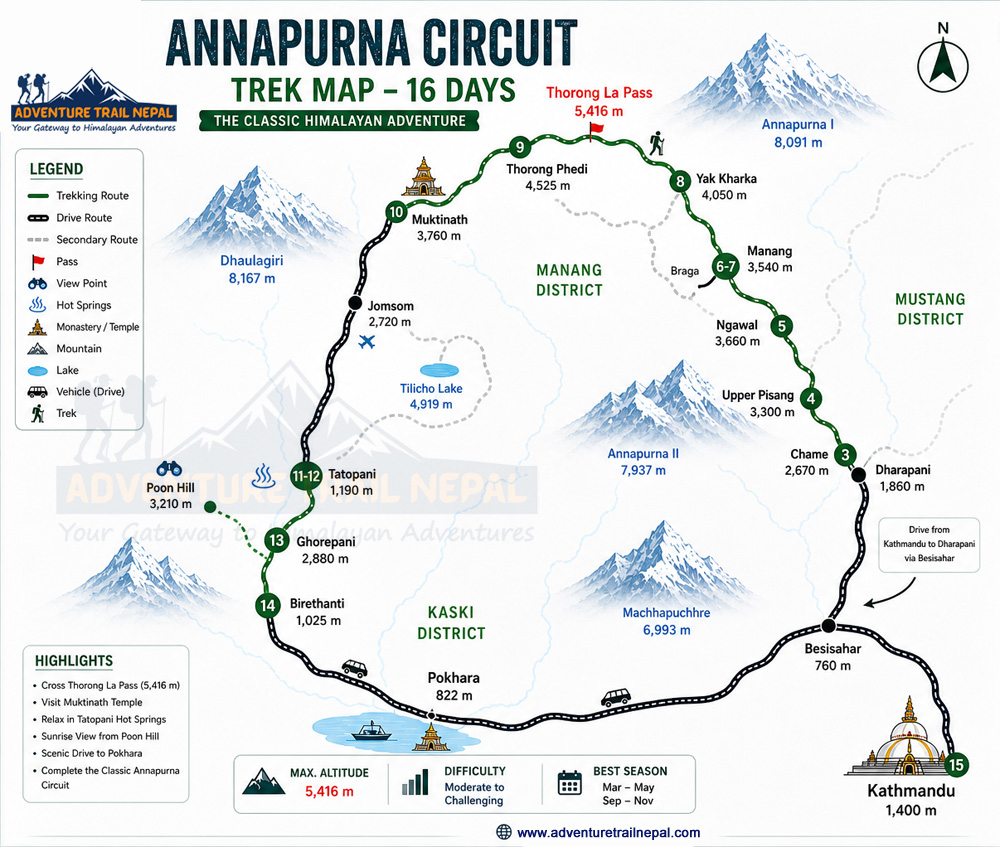
Duration: Approximately 13–17 days
Maximum altitude: 5,416 m at Thorong La Pass
Difficulty: Moderate to challenging
The Annapurna Circuit Trek is famous for its extraordinary geographical and cultural diversity. The route travels through subtropical forests, terraced farmland, alpine landscapes and the rain-shadow region of Mustang before crossing Thorong La.
Duration: Approximately 7–12 days
Maximum altitude: 4,130 m
Difficulty: Moderate
The Annapurna Base Camp Trek leads through beautiful villages and rhododendron forests into the heart of the Annapurna Sanctuary.
It is particularly popular among trekkers looking for a relatively short Himalayan trek with spectacular mountain scenery.

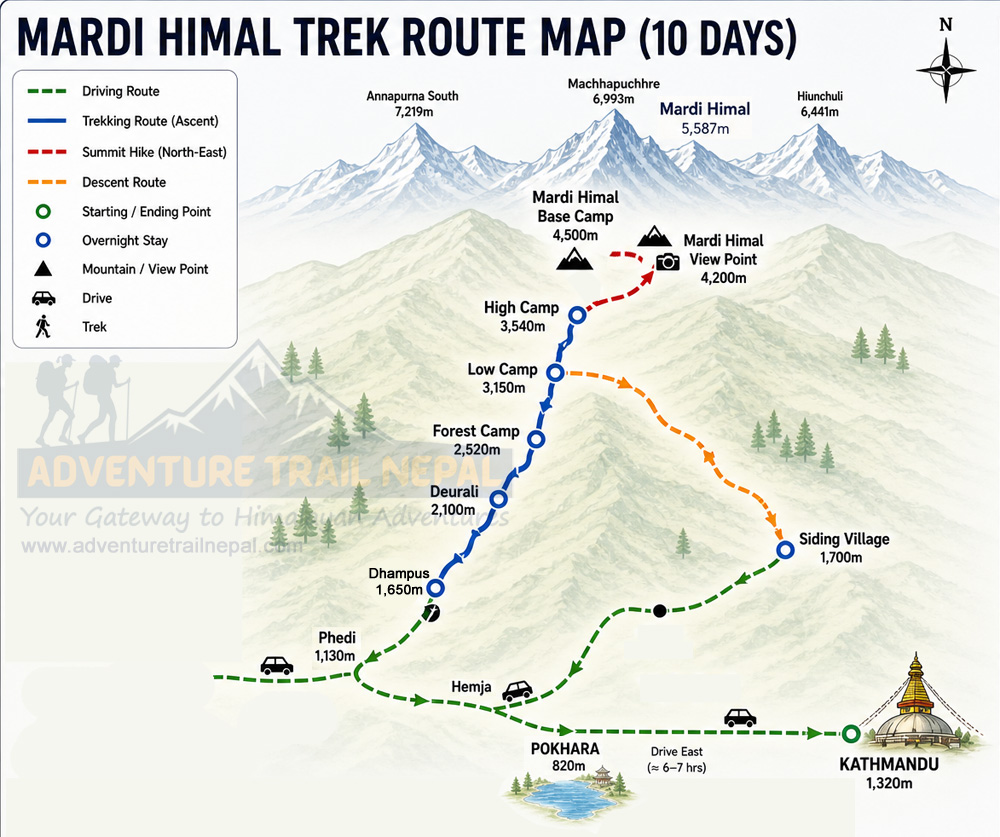
Duration: Approximately 4–7 days
Maximum altitude: Around 4,500 m at Mardi Himal Base Camp/viewpoint depending on itinerary
Difficulty: Moderate
The Mardi Himal Trek is a relatively short route offering impressive views of Machhapuchhre, Annapurna South, Hiunchuli and surrounding peaks.
It is an excellent choice for travelers looking for a shorter alternative to the longer Annapurna treks.
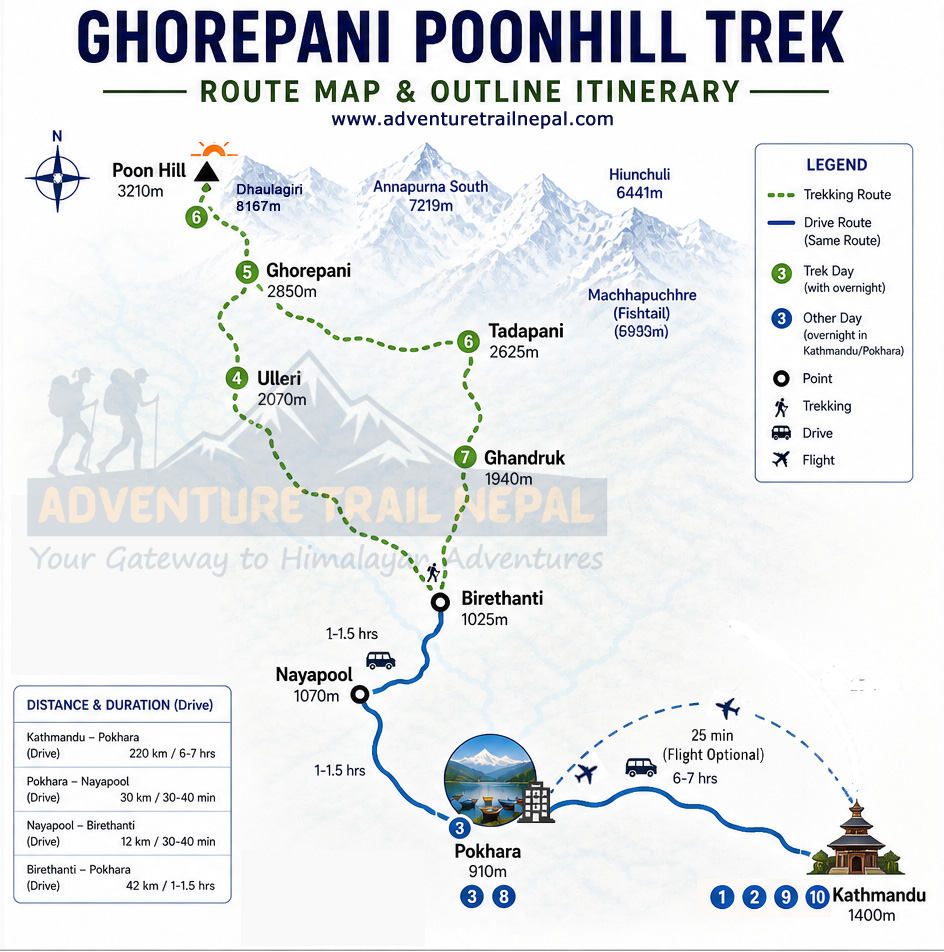
Duration: Approximately 4–5 days
Maximum altitude: Around 3,210 m at Poon Hill
Difficulty: Easy to moderate
The Ghorepani Poon Hill Trek is one of Nepal’s most popular short trekking routes.
The sunrise from Poon Hill provides spectacular views of the Annapurna and Dhaulagiri ranges.
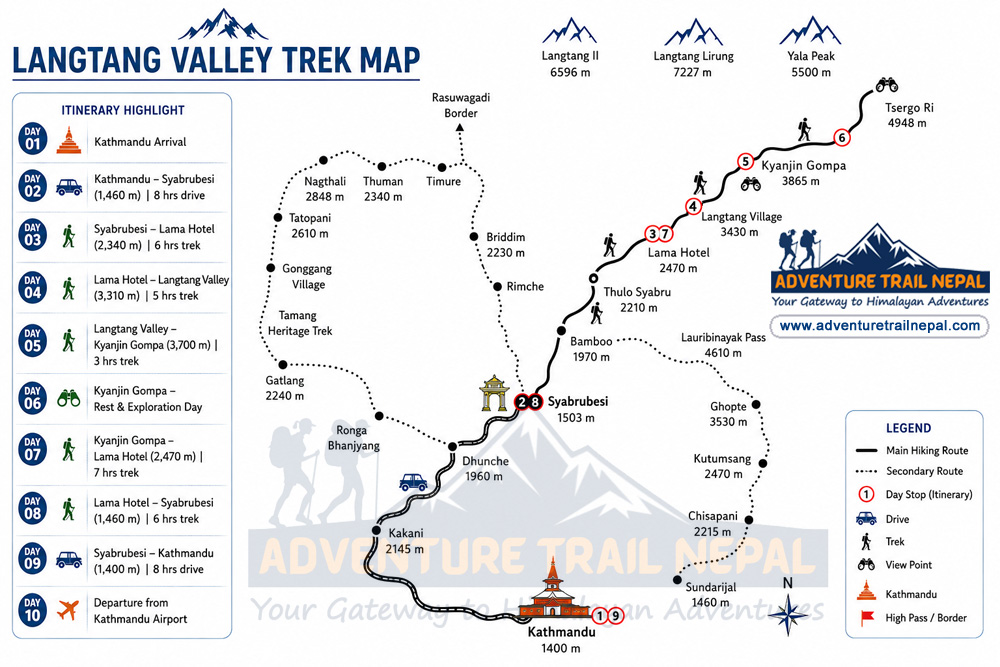
Located relatively close to Kathmandu, the Langtang region is an excellent option for travelers who want Himalayan scenery, mountain villages and cultural experiences without traveling deep into the Everest or Annapurna regions.
Duration: Approximately 7–10 days
Maximum altitude: Around 4,984 m at Tserko Ri
Difficulty: Moderate
The trail passes through Tamang villages, forests, alpine landscapes and the Langtang Valley.
Duration: Approximately 7–10 days
Difficulty: Moderate to challenging
Gosaikunda is a sacred alpine lake situated at high altitude. The trek combines mountain scenery with important Hindu and Buddhist pilgrimage traditions.
Duration: Approximately 5–7 days
Difficulty: Easy to moderate
Helambu is suitable for travelers looking for a shorter cultural and Himalayan trekking experience close to Kathmandu.
The Manaslu and restricted regions offer some of Nepal’s most spectacular and less-developed trekking experiences. These routes generally require additional permits and have specific regulations.
Duration: Approximately 14–18 days
Maximum altitude: 5,106 m at Larkya La Pass
Difficulty: Challenging
The Manaslu Circuit Trek circles Mount Manaslu and offers dramatic mountain landscapes, remote villages and rich Tibetan-influenced culture.
The crossing of Larkya La is one of the major highlights of the trek.

Tsum Valley Trek
Duration: Approximately 14–19 days
Difficulty: Moderate to challenging
Known as a culturally rich Himalayan valley, Tsum offers ancient Buddhist monasteries, traditional villages and spectacular mountain scenery.
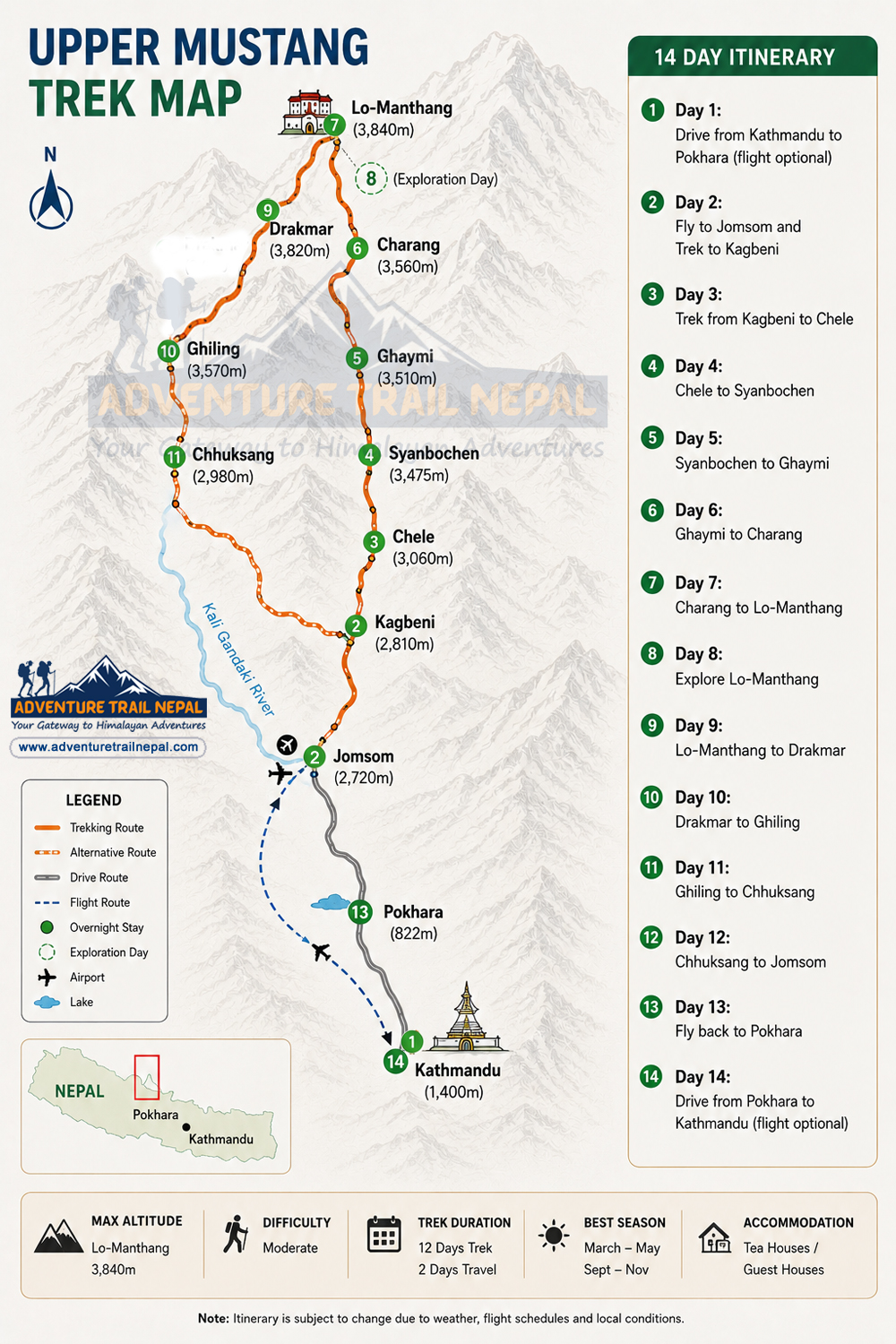
Duration: Approximately 10–14 days
Difficulty: Moderate
Upper Mustang is known for its distinctive trans-Himalayan landscape, ancient caves, monasteries and traditional Tibetan-influenced culture.
Lo Manthang is one of the major attractions of the region.
For experienced trekkers looking for remote wilderness and fewer visitors, Nepal’s eastern and western Himalayan regions provide some of the country’s most demanding trekking adventures.
Duration: Approximately 22–28 days
Maximum altitude: Around 5,143 m, depending on route
Difficulty: Strenuous
The Kanchenjunga Base Camp Trek takes trekkers into the remote eastern Himalayas near Mount Kanchenjunga, the world’s third-highest mountain.
The route offers remote villages, high mountain valleys, glaciers and spectacular Himalayan landscapes.
Duration: Approximately 18–22 days
Difficulty: Strenuous
The Makalu Base Camp Trek leads into the remote Makalu-Barun region and is suitable for experienced trekkers seeking wilderness and challenging terrain.
Duration: Approximately 18–21 days
Difficulty: Very challenging
The Dhaulagiri Circuit is an expedition-style trekking route involving remote terrain, high passes and demanding conditions. It is best suited to experienced trekkers with appropriate preparation.
Nepal Trekking Routes by Duration
| Trek Duration | Recommended Routes |
| 4–7 days | Poon Hill, Mardi Himal, Helambu, Pikey Peak |
| 7–12 days | Annapurna Base Camp, Langtang Valley, Gosaikunda |
| 11–17 days | Everest Base Camp, Gokyo Lakes, Annapurna Circuit, Upper Mustang |
| 14–20 days | Manaslu Circuit, Tsum Valley, Everest Three Passes |
| 18–28+ days | Kanchenjunga, Makalu Base Camp, Dhaulagiri Circuit |
Duration varies according to the starting point, acclimatization days, transportation arrangements and itinerary.
Easy to Moderate Treks
Suitable for travelers with limited trekking experience:
Moderate Treks
Good for reasonably fit travelers with some preparation:
Moderate to Challenging
Require good physical preparation and acclimatization:
Challenging to Extreme
Best suited to experienced trekkers:
Important: Difficulty depends not only on distance but also on altitude, weather, terrain, daily elevation gain, remoteness and individual experience.
Permit requirements vary according to the trekking region and route.
Common permits and entry requirements can include:
Restricted trekking areas can have additional rules regarding permits, authorized trekking agencies and guide requirements. Regulations can change, so trekkers should confirm the latest requirements before departure.
For current official information, check the Nepal Tourism Board and relevant government authorities.
The best trekking seasons are generally spring and autumn.
Spring: March to May
Spring brings generally favorable trekking conditions, clear mountain views and blooming rhododendrons.
Autumn: September to November
Autumn is traditionally considered one of the best seasons for trekking, with relatively stable weather and excellent mountain visibility.
Winter: December to February
Lower-altitude treks such as Poon Hill and some short Himalayan routes can be good options, while high passes and higher-altitude routes may be affected by snow and cold temperatures.
Monsoon: June to August
Rainfall affects many trekking regions, but rain-shadow areas such as Upper Mustang can be particularly attractive during the monsoon season.
When choosing a trekking route, consider:
Your available time: A 4–7 day trek is very different from a 20-day expedition.
Your experience: Beginners may prefer shorter routes, while experienced trekkers can consider high passes and remote regions.
Altitude: High-altitude routes require proper acclimatization and preparation.
Scenery: Choose between forests and villages, high Himalayan peaks, alpine lakes, glaciers or trans-Himalayan landscapes.
Culture: Routes such as Everest, Manaslu, Langtang and Upper Mustang provide opportunities to experience distinctive Himalayan cultures and traditions.
Remoteness: If you prefer fewer visitors and wilderness, consider Kanchenjunga, Makalu, Dhaulagiri, Manaslu or other remote routes.
What is the most popular trekking route in Nepal?
The Everest Base Camp Trek is one of Nepal’s most famous and internationally recognized trekking routes. The Annapurna Circuit and Annapurna Base Camp are also among the country’s most popular routes.
What is the best short trek in Nepal?
Ghorepani Poon Hill and Mardi Himal are excellent choices for travelers with limited time. Pikey Peak and Helambu are also good short trekking options.
Which Nepal trek is best for beginners?
Ghorepani Poon Hill is one of the most accessible Himalayan trekking routes. Mardi Himal and shorter Langtang itineraries can also be considered depending on fitness and experience.
Which is the most challenging trek in Nepal?
Routes such as Dhaulagiri Circuit, Makalu Base Camp, Kanchenjunga Base Camp, and Everest Three Passes are among the more demanding trekking experiences in Nepal.
How long do Nepal trekking routes take?
Trekking itineraries range from approximately 4 days to more than 4 weeks, depending on the destination, route, acclimatization requirements and transportation arrangements.
Do I need a guide for trekking in Nepal?
Guide requirements depend on the trekking region and current regulations. Some areas have specific guide and agency requirements, particularly restricted regions. Always check the latest regulations before starting your trek.
Nepal’s trekking routes provide an exceptional combination of Himalayan scenery, adventure, culture, wildlife, traditional villages and unforgettable mountain experiences. Whether you have only a few days for a short Himalayan hike or several weeks for a remote high-altitude adventure, there is a trekking route to suit your interests.
From the iconic Everest Base Camp and diverse Annapurna Circuit to the peaceful Mardi Himal, culturally rich Manaslu and Tsum Valley, and remote wilderness of Kanchenjunga and Makalu, Nepal offers trekking experiences for a wide range of travelers.
Choose your route, prepare carefully, travel responsibly, and experience the Himalayas with local expertise.