Makalu
18 Days
Moderate to Challenging
2-30 Persons
5000m.
Spring and Autumn
Trekking / Hiking
Hotel & Tea House
Breakfast, Lunch & Dinner
Private Vehicle and Flight
Kathmandu
Kathmandu
The Makalu Base Camp Trek is a premier trekking destination in Nepal, offering a spectacular journey for adventure seekers and solitary trekkers. This trek takes you through Makalu Barun National Park, a pristine conservation area spanning 2,330 km², located across Solukhumbu and Sankhuwasabha districts.
The highlight of this trek is reaching the Makalu Base Camp (5,000 m) and witnessing the world’s fifth-highest peak, Mount Makalu (8,463 m), along with panoramic views of Mount Everest, Lhotse, Chamlang, and other Himalayan giants. The Makalu Base Camp trek trail passes through lush rhododendron forests, deep valleys, alpine meadows, and high passes, offering a perfect blend of biodiversity, natural beauty, and cultural immersion.
This Makalu Base Camp trek is moderately challenging, requiring a good level of fitness and some high-altitude trekking experience. With its remote landscapes, traditional Sherpa villages, and breathtaking mountain scenery, Makalu Base Camp Trek is truly a once in a lifetime Himalayan adventure.
Fly 50 minutes to Tumlingtar, then drive 3 hours on a bumpy road to Chichila. Enjoy the scenic lowlands of eastern Nepal before starting the trek.
Overnight stay: Lodge in Chichila
Trek through delightful villages, terraced fields, and mountain forests. The trail climbs gently to Num, offering wide ridge views along the way.
Overnight stay: Lodge in Num
Descend to Arun Khola, passing through forests and cultivated lands. Makalu Barun National Park begins here — permits are obtained at the park entrance.
Overnight stay: Camp in Seduwa
Ascend through hill trails surrounded by Kasuwa and Ipsuwa Khola rivers, passing small paddy fields and traditional villages.
Overnight stay: Lodge at Tashi Gaon
The trail rises steeply into upper Barun Valley. Enjoy rhododendron forests and alpine scrub before reaching Khongma, the last stop before Shipton La Pass.
Overnight stay: Camp at Khongma
A day to rest and acclimatize at 3,560 m, preparing for the challenging high passes ahead.
Overnight stay: Camp at Khongma
Climb to Shipton La and then to Keke La Pass (4,152 m). Spectacular views of Chamlang (7,319 m), Peak 6 (6,524 m), and Peak 7 (6,758 m). Descend to Debotay for overnight camping.
Overnight stay: Camp at Debotay
Pass through rhododendron forests and the Barun River valley, slowly gaining altitude until reaching Yangle Kharka, the base of the valley.
Overnight stay: Camp at Yangle Kharka
Trek through alpine meadows and yak pastures. The trek becomes more challenging as altitude increases — acclimatization is crucial.
Overnight stay: Camp at Merek
Ascend the valley through boulder fields and yak pastures. Enjoy spectacular views of Makalu’s southeast ridge upon arrival.
Overnight stay: Camp at Shersong
After proper acclimatization, hike to Makalu Base Camp. Marvel at the majestic peaks surrounding the base camp and return to Shersong for overnight stay.
Overnight stay: Camp at Shersong
Descend carefully through the same valley, taking in final views of Makalu before reaching Yangle Kharka.
Overnight stay: Camp at Yangle Kharka
Descend into lower forests and climb briefly to Mumbuk, surrounded by lush greenery and flowing streams.
Overnight stay: Camp at Mumbuk
Retrace your steps through fir and rhododendron forests, passing Keke La and Shipton La, before returning to Khongma.
Overnight stay: Camp at Khongma
Descend through forests and hillsides back to the Sherpa village of Tashi Gaon.
Overnight stay: Lodge at Tashi Gaon
Continue descending the Arun Khola valley, retracing your steps to Num.
Overnight stay: Lodge at Num
Finish the trekking section and drive back to Tumlingtar for an overnight stay.
Overnight stay: Lodge in Tumlingtar
Take a scenic flight back to Kathmandu and transfer to your hotel. End of trek.
Overnight stay: Hotel in Kathmandu
Interested in this trip? Start planning your adventure today!
Proper preparation and a well-organized packing list are essential for a safe and successful Makalu Base Camp Trek. This spectacular trekking route passes through some of the most remote and rugged regions of eastern Nepal, where facilities are limited and weather conditions can change rapidly. Packing the right clothing, trekking gear, and personal essentials will help ensure a comfortable and enjoyable journey.
Warm, weather-appropriate clothing, a high-quality sleeping bag, and sturdy trekking boots are essential for staying comfortable and safe throughout the trek. Since there are only a few small shops and limited services along the route, it is important to carry all the necessary equipment and personal items before starting your adventure.
By packing wisely, you will be well-prepared to tackle the diverse terrain, varying altitudes, and changing weather conditions while maintaining your comfort, hygiene, and safety.
Winter trekking (December to February) requires additional insulation due to freezing temperatures and snowfall.
During the summer and monsoon seasons (June to September), heavy rain, muddy trails, and leeches are common. Waterproof gear becomes especially important.
To reduce your luggage weight, the following items can be rented in Kathmandu before the trek:
Note: Avoid overpacking. Your porter will carry the duffel bag with a maximum weight limit of 10 – 20 kg (22 lbs) per trekker. Carry your valuables, documents, water bottle, camera, snacks, and other daily essentials in your daypack.

It is a moderately challenging trek with high-altitude trekking. Good physical fitness and previous trekking experience are recommended.
The ideal seasons are spring (March–May) and autumn (September–November).
Yes. You need a Makalu Barun National Park Permit, a TIMS Card, and relevant trekking permits, all arranged by the trekking agency.
Accommodation is local lodges and tea houses on the trail. Hotels in Kathmandu and Tumlingtar are included.
Yes, covering medical emergencies and helicopter evacuation (minimum USD 100,000) is mandatory.
The Makalu Base Camp at 5,000 m is the highest point.
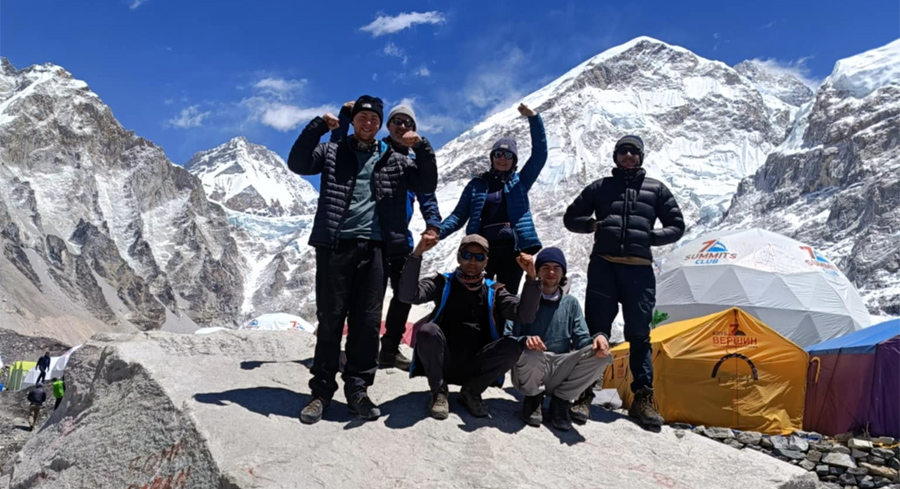 Hiking on Top of the World.
The Everest Base Camp Trek (EBC) is a legendary adventure that takes you deep into...
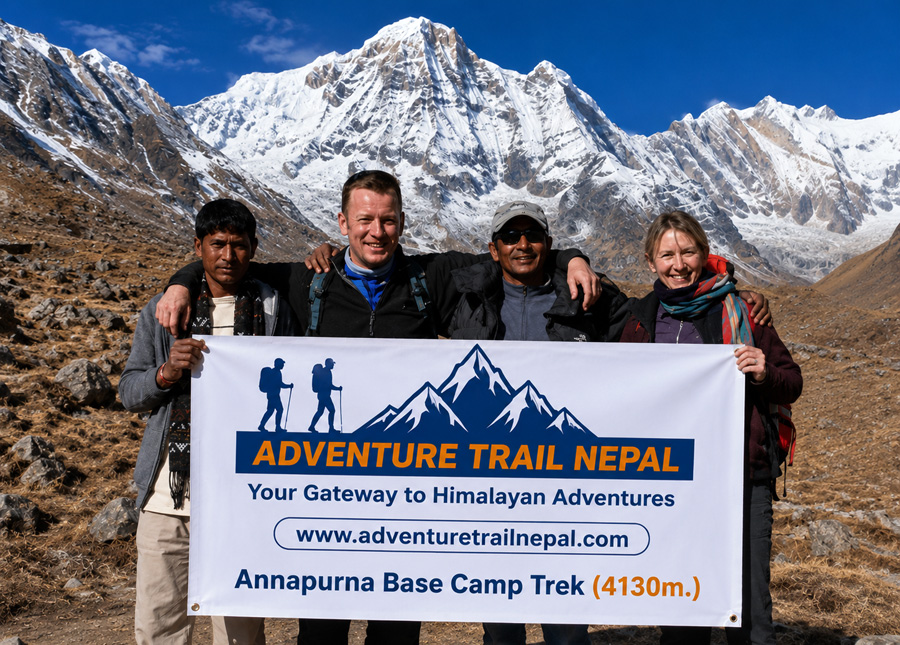 Best Seller
The Annapurna Base Camp Trek (ABC) is one of Nepal’s most iconic and rewarding trekking...
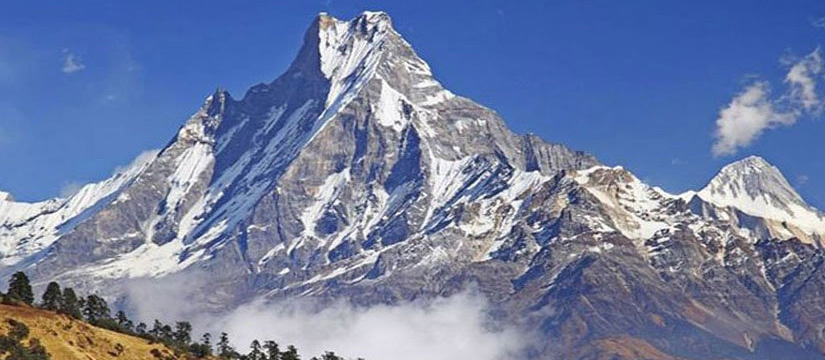 Best Seller
The Mardi Himal Trek is a hidden gem nestled in the heart of Nepal’s Annapurna...
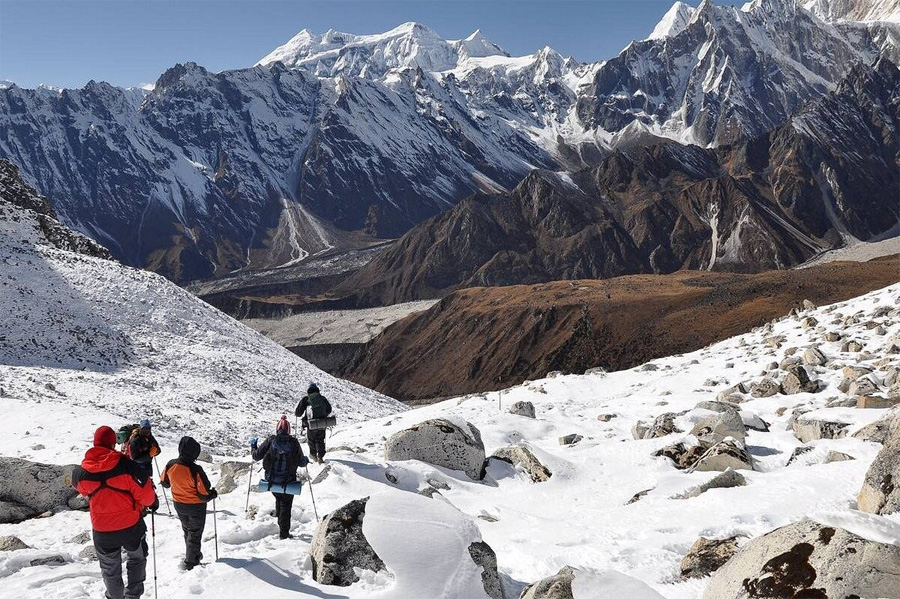 Best Seller
The Manaslu Base Camp Trek is one of Nepal’s most breathtaking and adventurous trekking experiences,...