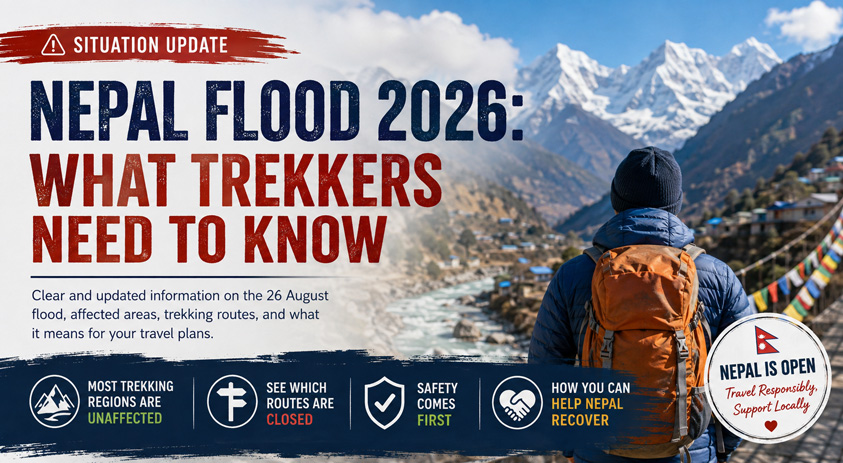
Nepal has experienced a serious and tragic flood in the north-central part of the country following a glacier collapse on 26 August 2026. The disaster has caused significant loss of life and extensive damage to roads, bridges, settlements, hydropower facilities, and the main road connecting Nepal with the Tibet border.
We understand that travellers planning to visit Nepal this autumn may be concerned after seeing headlines about the flooding. The most important thing to understand is that the flooding was concentrated in a specific river corridor in Rasuwa and Nuwakot districts. It did not affect most of Nepal’s major tourist and trekking destinations.
Kathmandu, Everest, Annapurna, Manaslu, Pokhara, Chitwan and Lumbini are continuing to operate normally, although travellers using certain highways should check the latest road conditions before travelling.
For trekkers, the key question is therefore not simply “Is Nepal affected by the flood?” but rather:
“Does my particular trekking or travel route pass through the affected area?”
For most visitors, the answer is no.
This page explains what happened, which areas have been affected, which trekking routes are currently closed or uncertain, and what travellers with existing bookings should do.
Is It Still Safe to Trek in Nepal?
Yes, most of Nepal’s major trekking regions remain outside the affected area.
The flood was a highly destructive but geographically concentrated event associated with the Bhotekoshi and Trishuli river system. It affected parts of Rasuwa and Nuwakot, particularly the corridor leading towards the Rasuwagadhi–Kerung border with Tibet.
This distinction is important.
When international media reports say “Nepal floods,” it can easily give the impression that the entire country has been affected. Nepal, however, is a large and geographically diverse country. A disaster in one river basin does not mean that trekking routes several hundred kilometres away are experiencing the same conditions.
The Everest region, Annapurna region, Manaslu region, Pokhara and Kathmandu were not directly affected by this flood event. Trails, accommodation and tourism facilities in these areas were reported to be operating normally as of 28 August 2026.
That said, the situation in the affected districts is still developing. Assessment teams are continuing to inspect roads, bridges and trekking routes. Travellers should therefore always check the latest local information before departure, particularly if their itinerary passes through northern Rasuwa.
What Happened on 26 August 2026?
On the morning of 26 August 2026, a glacier collapse occurred north of Langtang Lirung.
The sudden collapse generated a powerful surge of water and debris that travelled down the Bhotekoshi River, eventually joining the Trishuli River.
The flood travelled approximately 72 kilometres through Rasuwa and Nuwakot, causing extensive destruction along the river corridor before continuing towards the Tibet side.
The disaster caused severe damage to infrastructure.
According to the information available at the time of this update:
The human impact has been devastating, with hundreds of people confirmed dead and many others still reported missing. The number of missing people, including travellers, has changed as authorities continue to identify and reconcile the affected population.
Because this is an ongoing disaster response, casualty and damage figures should be treated as provisional and checked against official government updates.
Which Trekking and Travel Areas Are Currently Closed?
At present, several areas in northern Rasuwa should be considered closed to tourists and trekkers while rescue, recovery and infrastructure assessments continue.
The Rasuwagadhi–Kerung border crossing has been severely affected. Damage to bridges, roads and border infrastructure means that the overland route between Nepal and Tibet is currently not operating normally.
This also affects travellers planning an overland Tibet or Mount Kailash journey via Nepal.
Timure is one of the settlements that experienced severe flooding along the Bhotekoshi corridor.
Recovery and reconstruction work is ongoing, and the area should not currently be treated as a normal tourist destination.
Syabrubesi is particularly important for trekkers because it is the traditional road access point for the Langtang Valley.
Although the upper Langtang trekking trail is geographically different from the Bhotekoshi river corridor, access to Syabrubesi itself has been seriously affected by damage to the road.
For this reason, travellers should not attempt to travel independently to Syabrubesi until authorities confirm that the road and destination are safe and accessible.
The main road connecting Betrawati with Rasuwagadhi suffered extensive damage.
With multiple sections destroyed, normal vehicle travel towards the Tibet border is currently not possible.
The Tamang Heritage Trek passes through areas close to the affected Bhotekoshi and Timure corridor.
Until trekking agencies, local authorities and survey teams have inspected the route properly, we recommend treating the trek as closed or postponed.
Langtang Valley and Gosaikunda: What Should Trekkers Know?
The situation around Langtang Valley and Gosaikunda requires more careful explanation.
The flood did not simply travel along the entire Langtang trekking route.
At Syabrubesi, two different river systems meet. The Bhotekoshi, which carried the destructive flood, comes from the north, while the Langtang Khola follows the valley towards Kyanjin Gompa.
This geographical difference explains why reports about Langtang can sometimes appear contradictory.
The upper Langtang trekking trail was not directly in the main flood path, and there has not been a verified report that the entire trail between Syabrubesi and Kyanjin Gompa was destroyed.
However, access is currently the major problem.
The road to Syabrubesi has been damaged and tourist access has been restricted. In practical terms, this means that even if sections of the upper trekking trail remain physically intact, the trek cannot simply resume as normal.
There is also another important consideration.
The glacier involved in the disaster was located north of Langtang Lirung, the prominent mountain at the head of the Langtang Valley. Until specialists have assessed the remaining glacier and surrounding conditions, it is sensible to take a cautious approach to trekking in the upper valley.
Gosaikunda also requires additional caution because it lies within the same broader catchment area.
Our Approach
At Adventure Trail Nepal, we believe that traveller safety must always come before completing a scheduled itinerary.
For this reason, we are not operating Langtang, Gosaikunda or Tamang Heritage departures until access is restored and the relevant authorities and competent technical teams have assessed the routes.
We understand that changing a long-planned trek can be disappointing. However, we would rather postpone or redesign an itinerary than put our guests, guides or porters at unnecessary risk.
Which Popular Trekking Regions Are Not Affected?
The good news is that the majority of Nepal’s most popular trekking destinations remain outside the affected flood corridor.
Kathmandu
Kathmandu was not directly affected by the flood.
Hotels, restaurants, sightseeing attractions, tourism businesses and city services continue to operate. Tribhuvan International Airport has also continued normal operations during the period covered by this update.
Travellers arriving in Nepal for a trekking or cultural holiday can therefore continue to plan their time in Kathmandu normally, subject to the latest travel updates.
Everest Region
The Everest trekking region was not affected by this flood event.
The main trekking routes around Lukla, Namche Bazaar and Everest Base Camp are outside the affected Bhotekoshi–Trishuli river system.
The Everest Base Camp Trek therefore continues to be available as planned, subject to normal mountain-weather and flight conditions.
Annapurna Region
The Annapurna region is also outside the affected flood area.
The popular:
are not reported to have suffered direct damage from this particular flood event.
Pokhara, the main gateway for Annapurna trekking, was also not directly affected.
As always, individual road conditions can change during the monsoon season, so travellers using overland transportation should check the latest highway situation before travelling.
Manaslu Region
The Manaslu Circuit remains outside the direct flood-affected corridor.
However, because some road journeys to trekking trailheads can pass through areas affected by heavy rainfall or downstream flooding, it is advisable to confirm current road conditions before departure.
Chitwan and Lumbini
Chitwan and Lumbini have not reported direct impacts to their main tourism areas from this event.
However, travellers travelling by road should be aware that some highways connecting Kathmandu, Chitwan and Pokhara use sections of the broader road network influenced by conditions around the Trishuli corridor.
Therefore, road status should be checked before making a road transfer.
Where necessary, we may recommend adjusting the route, changing the timing, or using a flight instead.
Is Adventure Trail Nepal’s Team Safe?
Yes.
Every member of the Adventure Trail Nepal team is safe and accounted for, including our guides and porters who were working with our groups.
We did not have clients travelling on the directly affected routes when the flood occurred.
The disaster has nevertheless touched many families in Nepal.
Some members of our team have relatives and friends in the affected districts, and several of our staff are supporting local relief activities during this difficult period.
We may therefore take a little longer than usual to respond to some enquiries over the coming days. We appreciate your patience and understanding.
What Should You Do If You Already Have a Nepal Trip Booked?
If you have a trip planned for autumn 2026, there is no need to cancel your entire Nepal holiday simply because you have seen reports about the flood.
The autumn trekking season normally runs from mid-September through November and is one of the busiest travel periods in Nepal.
Instead of cancelling immediately, first look at your itinerary and identify whether any part of your journey passes through the affected region.
Check your itinerary in this order:
If yes, contact your trekking operator before travelling. The itinerary may need to be postponed, rerouted or replaced with another trekking region.
If yes, you will need to discuss alternative arrangements because the border corridor has been severely affected.
Some road journeys between Kathmandu, Chitwan and Pokhara can be influenced by highway conditions in the wider area. Check the latest road status before departure.
In many cases, no major change will be necessary.
Our team can review your individual itinerary and tell you honestly whether any part of your trip needs to be changed.
What About Trekking Permits?
Travellers who already hold permits for an affected trekking region should contact their trekking agency or the relevant authorities before cancelling their trip.
Depending on the circumstances, permits may be transferred or reissued for another trekking region rather than simply being cancelled.
If you have booked your trip with Adventure Trail Nepal, contact us first. We will review your itinerary with you and explain the available options before you make any decision about cancellation.
How Can You Help Nepal After the Flood?
The destruction in the affected communities is significant, and many families will need support long after the immediate rescue operation is finished.
If you would like to make a financial contribution, we recommend using the official Government of Nepal disaster-relief mechanism rather than sending money to unknown individuals or unofficial social-media campaigns.
The Prime Minister’s Disaster Relief Fund is the government’s official mechanism for disaster-related donations. According to the information available in this update, the fund supports rescue, medical treatment, relief, rehabilitation and reconstruction.
Nepal Clearing House has also provided an online gateway for international donations.
Because fraudulent fundraising appeals can appear quickly following major disasters, always verify the official payment address before entering any personal or card information.
Adventure Trail Nepal does not collect, hold or forward donations for this disaster. If you choose to donate, please use the official government channel directly.
Where Should You Check for the Latest Information?
The situation is changing quickly, and information can change from one day to the next.
For the most reliable updates, travellers should check information from:
It is also important to understand that international travel advisories may take several days to reflect local developments. For a specific trekking route, speaking directly with a reputable Nepal-based trekking operator can often provide more practical route-level information.
Our Message to Travellers
We know that seeing news of a major natural disaster can make people question whether they should still travel to Nepal.
Our message is simple:
Nepal is still open, but not every part of Nepal is currently accessible.
The flood has caused a devastating situation in the Rasuwa and Nuwakot areas, and we should not minimise the seriousness of what has happened. At the same time, it is important not to assume that the entire country has been affected.
Kathmandu, Everest, Annapurna, Pokhara and many other popular tourist destinations remain outside the affected area.
For routes that are affected or uncertain, we will take a cautious approach. We will not reopen a trek simply because travellers are eager to return. We will wait for proper assessment, safe access and reliable information.
For travellers with existing bookings, our priority is to review each itinerary individually and provide an honest recommendation. Where a route is affected, we can look at postponement, alternative trekking regions or changes to transportation.
We are deeply saddened by the loss of life and extend our sincere condolences to everyone who has lost family members, friends and colleagues in this tragedy.
Nepal has faced natural disasters before, and our communities have always shown remarkable strength and resilience. The tourism industry is also an important part of the recovery. When it is safe to travel, continuing to visit Nepal responsibly can help support local hotels, guides, porters, drivers, restaurants, shops and communities whose livelihoods depend on tourism.
We will continue monitoring the situation and update this page as reliable information becomes available.
When Langtang and the affected northern routes are genuinely safe and accessible again, we will say so.
Until then, safety comes first.