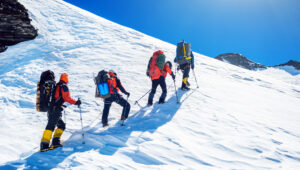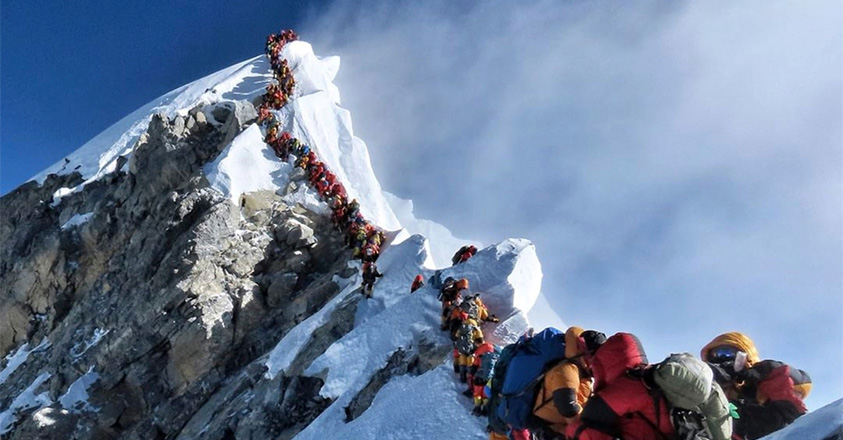
Mount Everest witnessed a historic achievement on Wednesday as 274 climbers successfully reached the summit from the Nepal side in a single day, the highest number ever recorded for one day on the world’s tallest mountain.
Standing at 8,849 metres above sea level, Everest lies along the border of Nepal and China’s Tibet Autonomous Region and can be climbed from either side. However, expedition operators confirmed that no climbers attempted the Tibetan route this season after Chinese authorities reportedly declined to issue climbing permits.
According to Rishhi Bhandari, Secretary General of the Nepal Mountaineering Association, the previous record for the Nepal side was 223 climbers, set on May 22, 2019. He noted that this year’s figure could still increase, as some climbers who already reached the summit may not yet have reported back to base camp.
Globally, the Guinness World Record for the highest number of Everest summits in a single day remains 354 climbers from both the Nepal and Tibet sides combined, achieved on May 23, 2019.
Verification Process Underway
Tourism Department official Himal Gautam stated that authorities are currently verifying summit claims through photographs and supporting evidence before issuing official summit certificates.
“We are in the process of having climbers return, submit photos and other evidence to verify their ascent, and then issue summit certificates. Only after that can we confirm the numbers,” Gautam said.
Nepal issued 494 climbing permits for Everest during the current spring season, with each permit costing $15,000.
Growing Concerns Over Everest Crowding
The new record has once again sparked discussions about overcrowding on Everest, particularly in the dangerous “death zone” near the summit, where oxygen levels are critically low.
Mountaineering experts have long criticised Nepal for issuing a large number of permits, warning that overcrowding can create traffic jams near the summit and increase risks for climbers.
In response to safety concerns, Nepal has introduced stricter regulations and increased permit fees in recent years in an effort to improve expedition management and climber safety.
Expedition Organisers Say Proper Planning Matters
Despite concerns over congestion, some expedition organisers argue that large numbers alone do not necessarily create danger if climbs are managed properly.
Lukas Furtenbach, founder of Austria-based Furtenbach Adventures, said his teams avoided delays by timing their summit push strategically.
“All our teams are behind the big crowd, so we were not affected,” Furtenbach said from Everest Base Camp. His company currently has around 40 climbers waiting at various camps for their summit attempt.
He added that adequate oxygen supplies and proper coordination are key to handling larger numbers on the mountain.
“If teams have enough oxygen, it is not a big problem,” Furtenbach explained, comparing Everest traffic to heavily visited peaks in the European Alps.
A Historic Yet Challenging Season
The record-breaking day highlights Everest’s enduring global appeal while also underscoring the ongoing challenge of balancing adventure tourism with climber safety.
As more mountaineers continue their summit attempts during the peak April–May climbing season, officials and expedition companies will remain under pressure to ensure safe and responsible climbing practices on the world’s highest peak.