Nepal’s only hunting reserve, the Dhorpatan Hunting Reserve, has successfully concluded its second hunting season of the year (Chaitra–Baishakh), attracting professional hunters from around the world.
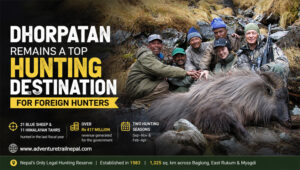
Spread across 1,325 square kilometers in the districts of Baglung, Myagdi, and Rukum East, the reserve is managed under a scientific conservation system that allows controlled hunting of selected wildlife species. During the latest hunting season, a total of 19 animals were legally hunted in designated hunting blocks, including Sundaha, Seng, Dogadi, Barse, Falgune, and Ghustung.
Scientific Wildlife Management and Conservation
Established in 2044 BS, the reserve follows a strict wildlife conservation model designed to maintain ecological balance and protect endangered species. According to senior ecologist Haribhadra Acharya from the Department of National Parks and Wildlife Conservation, hunting quotas are determined through a scientific wildlife census conducted every five years.
“We only permit the hunting of old male animals, usually those above 12 years of age, identified through telescopic observation,” Acharya stated. “This system helps prevent habitat degradation while maintaining a healthy and balanced wildlife population.”
The reserve has generated significant revenue through regulated hunting activities. In the fiscal year 2082/83, Dhorpatan Hunting Reserve earned approximately Rs 41.779 million. Hunting permits are allocated through a competitive bidding process, with premium permits for certain species reaching up to Rs 2.3 million.
Popular Destination for International Hunters
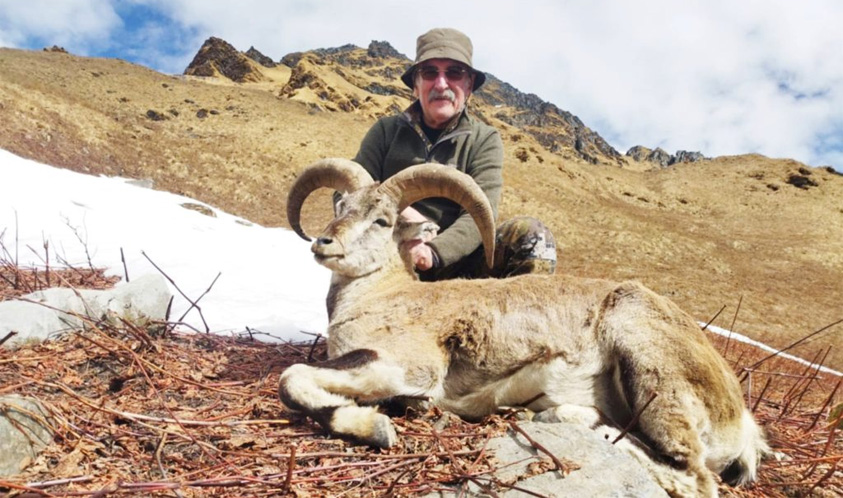
The reserve has gained international recognition among professional hunters from countries such as the United States, France, Spain, Russia, Germany, Belgium, and Denmark. Hunting expeditions are coordinated through authorized travel companies, with participants typically spending between USD 30,000 and USD 35,000 for the experience.
Hunters are allowed up to 21 days to complete their expedition and are required to use licensed hunting equipment. Companies including Himalayan Safaris and Nepal Travel Expeditions organize and supervise these hunting trips.
Although some expeditions were affected by unfavorable weather conditions this season, officials reported that wildlife populations within the reserve remain stable and healthy. Authorities attribute this success largely to improved conservation measures and effective control of illegal poaching activities.
Following successful hunts, the meat is traditionally consumed by support staff working in the forest. Hunters are legally permitted to export non-meat trophies, including horns, skin, and hooves, in accordance with wildlife regulations.
Unique Conservation and Tourism Model in Nepal
The reserve continues to play an important role in Nepal’s conservation and tourism sectors. It is home to 32 species of mammals and 164 species of birds, including several rare and protected species.
By combining controlled hunting tourism with strict wildlife monitoring and conservation policies, Dhorpatan Hunting Reserve has become a unique example of sustainable natural resource management in Nepal.