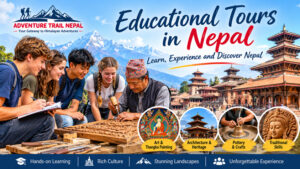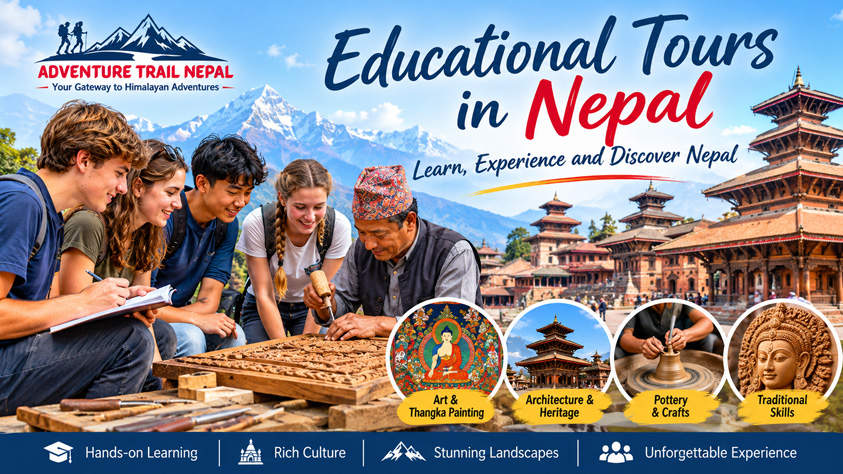
Travelling is one of the best ways to learn about the world. It allows students, researchers and curious travellers to explore different cultures, understand local traditions and gain practical knowledge beyond classroom lessons. Nepal is an excellent destination for this kind of educational travel, offering a unique combination of history, art, architecture, traditional skills, religion, nature and community life.
Known for the Himalayas, Mount Everest and its rich cultural heritage, Nepal offers much more than sightseeing and adventure. Visitors can learn traditional woodcarving from local artisans, understand how Thangka paintings are created, try pottery-making in Bhaktapur, explore ancient temple architecture in Kathmandu Valley, observe traditional metalwork and discover the process of making handmade Nepali paper.
There are also opportunities to learn about traditional music, dance, poetry, painting, weaving, farming, local food, herbal knowledge and the everyday lifestyles of different communities.
An educational tour in Nepal can be designed around a particular subject or combine several learning experiences into one journey. School students, university groups, art and design students, architecture learners, researchers and international visitors can gain valuable knowledge through direct interaction with local experts and skilled craftspeople.
What Is Educational Tourism?
Educational tourism is a form of travel in which learning is an important part of the journey. Instead of visiting destinations only for sightseeing, travellers participate in activities that help them gain practical skills, cultural knowledge, academic understanding or personal experience.
Learning takes place through workshops, demonstrations, guided visits, field studies, community interactions and hands-on activities.
For example, an architecture student visiting Patan can study traditional Newari buildings, temples, courtyards and wooden windows. An art student can observe the preparation and painting techniques used in traditional Thangka or Paubha art. A school group visiting Bhaktapur can try making clay pots with local potters.
Educational tourism in Nepal can cover a wide range of subjects:
The most rewarding educational tours allow visitors to meet the people who preserve these skills and learn directly from their knowledge and experience.
Why Is Nepal an Excellent Destination for Educational Tours?
Nepal is a culturally and geographically diverse country. Its ancient cities, traditional villages, religious heritage, Himalayan landscapes and multicultural communities provide an outstanding setting for experiential learning.
The Kathmandu Valley is one of the most important destinations for cultural and architectural studies in Nepal. Kathmandu, Patan and Bhaktapur are historic cities known for their temples, palaces, courtyards, monasteries, sculptures and traditional Newari architecture.
The Kathmandu Valley UNESCO World Heritage property includes seven groups of monument zones representing important achievements in architecture, art and religious heritage.
Students can explore:
These sites offer valuable opportunities for architecture, history, art and cultural studies.
One of Nepal’s most interesting educational opportunities is the chance to see traditional skills being practised by local artisans.
Unlike visiting a museum where finished objects are displayed, travellers can visit selected workshops and observe how different products are made.
Depending on workshop availability, participants may learn about the preparation of materials, tools, techniques, design patterns and the time required to complete a handmade product.
Nepal is home to many ethnic groups, languages, religions and cultural traditions. Hinduism and Buddhism have deeply influenced the country’s architecture, art, festivals and everyday life.
Visitors can learn about religious symbols, traditional ceremonies, Buddhist philosophy, Hindu rituals, local festivals and the cultural relationships between different communities.
Educational travel also offers opportunities to understand rural life, traditional occupations, local food systems and community-based activities.
A village visit can introduce students to farming, animal husbandry, weaving, basket-making, traditional cooking and local building techniques.
These experiences help visitors understand how traditional knowledge is passed from one generation to another.
Learn Traditional Art and Craft-Making in Nepal
Nepal has a rich tradition of handmade products, many of which are closely connected to religion, architecture and everyday life. Travellers interested in art and design can explore several traditional crafts through demonstrations and practical workshops.
Woodcarving is one of Nepal’s best-known traditional crafts, particularly in the Kathmandu Valley.
Traditional Newari craftsmen have created beautiful wooden windows, doors, pillars, roof struts, temple decorations and other architectural features for centuries.
The famous Peacock Window in Bhaktapur and the intricately carved buildings of Patan and Kathmandu demonstrate the skill and creativity of traditional woodcarvers.
During an educational workshop, students may learn:
With guidance from an artisan, participants may have an opportunity to practise simple carving techniques on a small piece of wood.
This experience is particularly interesting for art, sculpture, architecture and design students.
Stone carving is another important part of Nepal’s traditional artistic heritage.
Visitors can observe how artisans transform blocks of stone into sculptures, religious figures, decorative elements and architectural details.
Traditional stone sculptures can be found in temples, courtyards, monasteries and public spaces throughout the Kathmandu Valley.
A stone-carving learning session may introduce participants to:
Students should be introduced to simple, supervised activities suitable for their age and experience.
Thangka painting is a traditional Tibetan Buddhist religious art form, while Paubha is a traditional Newar religious painting tradition of the Kathmandu Valley.
Both are important artistic traditions, although they have their own histories, styles and cultural contexts.
These paintings often depict Buddhist or Hindu deities, mandalas, religious stories and symbolic compositions.
Learning about Thangka and Paubha art can introduce students to:
An introductory workshop may allow participants to practise simple patterns, outlines or basic painting techniques under the guidance of an experienced artist.
Completing a traditional Thangka painting requires considerable training and time, so a short educational workshop should focus on understanding the process rather than producing a complete traditional artwork.
Bhaktapur is one of the best places in Nepal to experience traditional pottery-making.
Pottery Square is particularly well known for its potters, who prepare clay and shape it into different household and decorative products.
Visitors can observe traditional pottery wheels, clay preparation, shaping, drying and firing techniques.
A practical pottery workshop can introduce students to:
Under the supervision of local potters, participants can try making their own small clay products.
This is an enjoyable hands-on activity for school groups, families, art students and international educational visitors.
Nepal has a long tradition of metal craftsmanship, particularly in bronze, brass, copper and other metals.
Patan is especially known for its traditional metal statues and religious sculptures. Visitors can learn about the skills involved in creating statues, ritual objects, decorative products and household items.
A metalwork learning experience may include demonstrations of:
Metalworking involves specialist tools and high temperatures, so visitors should observe demonstrations rather than attempt unsafe production activities.
Nepal is known for traditional handmade paper made from the bark of the Lokta plant, which grows in the Himalayan region.
Lokta paper has been used for traditional documents, religious texts, notebooks, stationery, packaging and handmade products.
A paper-making workshop can introduce visitors to:
Participants may be able to create a simple sheet of handmade paper or a small paper product.
This is particularly useful for students interested in traditional industries, sustainable materials, design and environmental studies.
Textiles are an important part of Nepal’s cultural heritage. Different communities have their own clothing styles, weaving techniques, patterns and materials.
Depending on the location and workshop, travellers may learn about:
An introductory weaving session can help students understand how raw fibres are transformed into finished products using traditional techniques.
Learn About Poetry, Literature and Creative Writing in Nepal
Nepal also has a rich literary heritage, with poetry, storytelling, folk literature and written traditions in Nepali and many other languages.
Students interested in literature can explore Nepal’s creative traditions through guided literary walks, discussions, poetry readings and writing workshops.
Traditional Poetry and Storytelling
Nepali literature includes traditional folk songs, oral storytelling, religious poetry, devotional compositions and modern literary works.
Visitors can learn about how stories and poems reflect local culture, history, landscapes, festivals and social life.
Possible learning activities include:
Learning Nepali Calligraphy and Traditional Scripts
Nepal has a history of manuscripts and traditional scripts, including Ranjana script, which is associated with Newar Buddhist cultural and religious traditions.
An introductory workshop may introduce students to traditional lettering, decorative writing, manuscript design and the historical role of written texts.
These sessions are particularly suitable for students interested in language, literature, typography, graphic design and cultural history.
Architecture and Traditional Building Design
Nepal’s architecture offers an excellent outdoor classroom for students of architecture, engineering, history and urban planning.
The Kathmandu Valley contains many examples of traditional buildings that demonstrate the relationship between local materials, climate, religious beliefs, artistic traditions and community life.
Study Traditional Newari Architecture
Kathmandu, Patan and Bhaktapur provide opportunities to study traditional Newari architecture and urban planning.
Students can explore:
Understand Traditional Building Materials
A guided architectural study tour can introduce students to materials traditionally used in Nepalese construction, such as brick, timber, stone, clay and traditional decorative elements.
Participants can learn how traditional buildings were designed, constructed, maintained and adapted to local environmental conditions.
They can also discuss earthquake-resistant construction, heritage conservation and the challenges of protecting historic buildings in a rapidly changing urban environment.
Visit Heritage Restoration Projects
Where access is permitted, students may learn about heritage conservation and restoration through approved projects, museums or presentations by conservation professionals.
These experiences are especially relevant to architecture, engineering, archaeology and heritage management students.
Music, Dance and Traditional Instrument Making
Music and dance are important parts of Nepal’s cultural identity. Different communities have their own musical traditions, instruments, songs and performances.
An educational tour can introduce visitors to traditional musical instruments, folk music, classical traditions and community performances.
Possible learning activities include:
Depending on availability, visitors may also meet local musicians and instrument makers to learn how traditional instruments are designed, assembled and played.
Traditional Food Making and Culinary Learning
Food is another excellent way to understand Nepal’s culture and local lifestyle.
Nepal’s cuisine varies between geographical regions and communities. Ingredients, preparation methods and traditional meals are influenced by local agriculture, climate, religion and cultural practices.
Students can participate in cooking demonstrations and learn to prepare traditional Nepali dishes.
Possible activities include:
A cooking workshop can provide practical knowledge about local ingredients, food culture and traditional cooking methods.
Agriculture, Traditional Farming and Rural Life
Nepal’s agricultural landscape provides opportunities for students to understand rural livelihoods, food production and traditional farming practices.
A village-based educational programme can include visits to farms, interactions with local farmers and practical demonstrations of agricultural activities.
Depending on the season and location, students may learn about:
These activities can help students understand the connection between agriculture, the environment, local economies and everyday life.
It is worth remembering that farming activities are seasonal, and the experience will depend on the time of year.
Traditional Healing, Ayurveda and Himalayan Knowledge
Nepal has diverse traditions of health knowledge, including Ayurveda, Himalayan herbal knowledge and community-based healing practices.
An educational visit can introduce students to the historical and cultural background of these traditions, the plants used in traditional knowledge systems and the relationship between people and their natural surroundings.
Learning activities may include:
Any herbal or medicinal preparation should be handled under appropriate professional supervision. These activities should be presented as cultural and educational experiences, not as medical treatment or a substitute for modern healthcare.
Traditional Art in Different Regions of Nepal
Educational tours do not need to be limited to Kathmandu Valley. Different parts of Nepal offer distinctive cultural and artistic experiences.
Mithila Art in Janakpur
Janakpur, in the eastern Terai region, is an excellent destination for learning about Mithila art.
This traditional art form is known for its colourful patterns, natural and cultural themes, geometric designs and representations of religious stories, nature and everyday life.
Students may learn about:
Where workshops are available, participants can try creating their own small Mithila artwork under the guidance of local artists.
Tharu Culture and Traditional Crafts in the Terai
The Tharu communities of Nepal have distinctive cultural traditions, architecture, clothing, music, dance and handicrafts.
In suitable community-led programmes, visitors can learn about traditional house construction, wall decoration, basket-making, local cooking, farming and cultural performances.
Such experiences should be arranged respectfully through local community organisations or hosts.
Himalayan Handicrafts and Local Traditions
Mountain communities in different parts of Nepal preserve their own weaving, wool-working, household crafts, religious art and traditional knowledge.
Depending on the destination, students may learn about local textiles, traditional clothing, handmade products and the relationship between crafts and Himalayan lifestyles.
Educational Tours for Schools, Colleges and Universities
Nepal can be a valuable destination for educational institutions looking to organise international study tours, cultural exchange programmes and practical learning journeys.
An educational tour can be designed around the academic interests and learning objectives of each group.
School Educational Tours
School groups can enjoy age-appropriate activities such as pottery-making, traditional painting, cooking demonstrations, cultural sightseeing, village visits and nature education.
These activities help younger students understand different cultures and develop creativity, curiosity and respect for local communities.
College and University Study Tours
University groups can participate in more specialised learning programmes.
Examples include:
Special Interest and Creative Learning Groups
Nepal can also be an interesting destination for independent learners, artists, photographers, designers, writers and cultural enthusiasts.
A personalised itinerary can combine practical workshops with guided visits to heritage sites, museums, traditional markets and local communities.
Best Places for Educational Tours in Nepal
The following destinations offer different opportunities for cultural and practical learning.
Kathmandu is an excellent starting point for educational tours. Students can explore Kathmandu Durbar Square, Swayambhunath, Boudhanath and Pashupatinath while learning about Hindu and Buddhist heritage, traditional architecture and local history.
The city also provides access to art studios, museums, traditional workshops and cultural institutions.
Patan is particularly suitable for students interested in fine arts, metal sculpture, architecture and traditional craftsmanship.
Patan Durbar Square, the Patan Museum and traditional artisan workshops offer opportunities to understand Nepal’s artistic heritage.
Bhaktapur is one of the best destinations for hands-on cultural learning.
Students can explore Pottery Square, Dattatreya Square, the famous Peacock Window, the 55-Window Palace and traditional Newari neighbourhoods.
Pottery-making and woodcarving workshops can make this visit especially rewarding.
Thimi, located between Kathmandu and Bhaktapur, is known for its pottery-making traditions and local crafts.
It can be included in a study tour focused on ceramics, traditional production methods and local industries.
Janakpur offers opportunities to learn about Mithila painting, Maithili culture, traditional designs and the cultural heritage of the eastern Terai.
Lumbini, the birthplace of Siddhartha Gautama, the Buddha, is an important destination for students interested in Buddhism, archaeology, religion, philosophy and world heritage.
The Sacred Garden, Maya Devi Temple and international monastic zone offer opportunities for cultural and historical learning.
Pokhara is suitable for educational programmes focusing on geography, mountain environments, tourism, environmental studies and local community life.
Students can explore Phewa Lake, visit nearby villages and learn about the natural environment of the Annapurna region.
Chitwan offers opportunities for students interested in wildlife, biodiversity, ecology and environmental conservation.
With qualified naturalists and appropriate arrangements, groups can learn about the Terai ecosystem, national park conservation, local communities and responsible wildlife tourism.
Sample Educational Tour Itinerary in Nepal: 10 Days
The following is an example of a 10-day educational journey combining cultural exploration, traditional crafts, architecture, nature and local experiences.
Day 01: Arrival in Kathmandu
Arrival at Tribhuvan International Airport, meet your local representative and transfer to the hotel. Introduction to Nepal, its geography, cultural diversity and educational programme.
Day 02: Kathmandu Heritage and Architecture Study
Explore Kathmandu Durbar Square, Swayambhunath and Boudhanath. Learn about traditional architecture, Hindu and Buddhist heritage, historical monuments and religious symbolism.
Day 03: Patan Art and Craft Learning
Visit Patan Durbar Square and Patan Museum. Explore traditional metalwork, sculpture and Newari architecture. Depending on availability, attend a practical workshop with a local artisan.
Day 04: Bhaktapur Pottery and Woodcarving
Explore Bhaktapur Durbar Square, Dattatreya Square and Pottery Square. Participate in a pottery-making session and learn about traditional woodcarving and architectural design.
Day 05: Thangka Painting and Handmade Paper
Visit suitable traditional art workshops to learn about Thangka or Paubha painting techniques and the process of making handmade Lokta paper. Participate in an introductory art or paper-making activity.
Day 06: Travel to Pokhara
Drive to Pokhara through Nepal’s scenic countryside. Observe rivers, hills, villages, terraced farmland and changing landscapes. Overnight in Pokhara.
Day 07: Pokhara Nature and Geography Learning
Explore Phewa Lake and selected local attractions. Learn about the geography of the Annapurna region, mountain environments, tourism and local livelihoods.
Day 08: Travel to Chitwan
Drive to Chitwan and explore the local Terai environment. Introduction to the region’s biodiversity, agriculture, traditional communities and conservation.
Day 09: Chitwan Wildlife and Cultural Learning
Join a guided nature activity with a qualified naturalist, subject to park rules and conditions. Learn about wildlife conservation, the local ecosystem and Tharu culture.
Day 10: Return to Kathmandu and Departure
Transfer to the airport according to your flight schedule or extend your stay for additional educational activities.
Note: This is a sample itinerary. Workshops, instructors and community visits should be confirmed in advance. The programme can be adjusted according to the group’s age, academic interests, travel dates and available time.
Best Time for Educational Tours in Nepal
Educational tours can be organised throughout the year, although the best season depends on the destinations and activities included.
Spring (March to May): A good season for cultural sightseeing, outdoor learning, village visits and nature-based activities.
Autumn (September to November): Often one of the most comfortable periods for exploring heritage sites, travelling between destinations and enjoying mountain scenery.
Winter (December to February): Suitable for many cultural workshops and city-based educational programmes. Morning and evening temperatures can be cold, particularly in the mountains.
Monsoon (June to August): A suitable period for selected indoor workshops, art and craft learning, museum visits and cultural activities. Heavy rainfall may affect road travel and outdoor programmes.
For school and university groups, it is advisable to plan well in advance, particularly when specialised instructors and practical workshops are required.
Practical Information for Students and Educational Travellers
Arrange Workshops in Advance
Traditional artisans and specialist instructors may not offer regular drop-in classes. Contact the workshop or local organiser in advance to confirm availability, duration, group size, language and fees.
Choose Activities According to Age and Interests
A programme for schoolchildren should be different from one designed for university students or professional art and architecture learners. Practical activities should be suitable for participants’ age, experience and safety requirements.
Work with Local Artisans and Communities
Choose genuine local workshops and community-based experiences. This supports traditional skills and allows participants to learn directly from people who practise them.
Respect Local Culture and Traditions
Some art forms and religious objects have sacred meanings. Visitors should listen to the instructor, follow local customs and ask permission before photographing artisans, workshops or religious ceremonies.
Prepare for Practical Activities
Wear comfortable clothing and suitable footwear. Some activities involve clay, paint, dust, tools or outdoor work. Follow the instructor’s safety guidance and use protective equipment where necessary.
Allow Enough Time for Learning
Do not overcrowd the itinerary with too many destinations. A meaningful educational tour should allow time for discussion, observation, practical activities and interaction with local people.
Consider Group Transport and Supervision
For schools and educational institutions, arrange suitable transport, accommodation, experienced guides and appropriate group supervision. Keep emergency contacts and relevant travel information available throughout the trip.
Responsible Educational Tourism: Learning While Supporting Local Communities
Educational tourism can contribute to the preservation of Nepal’s cultural heritage when it is organised responsibly.
Many traditional skills survive because families and communities continue to practise and pass them on. By participating in genuine workshops and purchasing authentic locally made products, visitors can support traditional artisans and their livelihoods.
Responsible educational travel should:
The purpose is not simply to watch how something is made. It is to understand the knowledge, creativity, history and people behind it.
Frequently Asked Questions About Educational Tours in Nepal
Is Nepal a good destination for educational tours?
Yes. Nepal offers a wide range of educational experiences in art, architecture, history, religion, traditional crafts, agriculture, biodiversity and cultural studies. It is suitable for school groups, university students, researchers and independent learners.
What can students learn in Nepal?
Students can learn traditional woodcarving, stone carving, pottery, Thangka and Paubha painting, metalwork, handmade paper production, traditional weaving, architecture, music, dance, literature, local cooking and environmental conservation.
Can international students participate in traditional craft workshops?
Yes. Selected local artisans and training centres may offer demonstrations and practical workshops for international visitors. Arrangements should be confirmed in advance, particularly for larger groups.
Where is the best place to learn traditional art in Nepal?
Patan, Bhaktapur and Kathmandu are excellent starting points. Patan is particularly known for metalwork and sculpture, Bhaktapur for pottery and woodcarving, and Kathmandu Valley more broadly for traditional painting, architecture and cultural heritage.
Can students learn Thangka painting in Nepal?
Yes. Some traditional art studios and instructors offer introductory Thangka or Paubha painting experiences. Short workshops generally teach basic techniques rather than the complete process of creating a traditional painting.
Are educational tours suitable for schoolchildren?
Yes. Educational tours can be designed for different age groups. Activities such as pottery, simple painting, traditional cooking, cultural sightseeing and nature learning can provide enjoyable practical experiences.
Can an educational tour be customised for universities?
Yes. University programmes can focus on specific academic subjects such as architecture, fine arts, anthropology, archaeology, history, environmental science, sociology or sustainable tourism.
How many days are needed for an educational tour in Nepal?
A three- to five-day programme can cover selected cultural and craft experiences in Kathmandu Valley. A seven- to ten-day tour can include additional destinations such as Pokhara, Lumbini or Chitwan. Longer programmes allow more time for specialised workshops and field studies.
Can students receive certificates after completing workshops?
This depends on the workshop provider. Some institutions may provide participation certificates, but this should be confirmed before booking. A participation certificate should not be confused with a formal professional qualification.
Is it possible to combine educational tours with trekking and adventure activities?
Yes. Educational tours can be combined with gentle hiking, village visits, nature walks, rafting and other suitable activities. The programme should be planned according to participants’ ages, fitness, interests and safety requirements.
Plan Your Educational Tour in Nepal with Adventure Trail Nepal
Nepal offers an opportunity to turn an ordinary holiday into a meaningful learning experience. From traditional art and architecture to pottery, painting, local food, music, farming and community life, every destination offers something new to discover.
Whether you are a school looking for an international educational trip, a university planning an academic study tour, an art student interested in traditional painting or an individual traveller eager to learn new skills, Nepal has many experiences to offer.
Adventure Trail Nepal can help organise tailor-made educational tours in Nepal according to your group’s interests, academic objectives, travel dates and budget.
We can coordinate cultural sightseeing, local guides, transport, accommodation, artisan workshops, practical learning activities and community visits to create a well-organised educational journey.
Travel beyond sightseeing. Meet local people, discover traditional knowledge and learn something new in Nepal.
Contact Adventure Trail Nepal to plan your educational tour and create a meaningful learning experience in the Himalayas.