Bhutan, famously known as the Land of the Thunder Dragon, is a country where ancient Buddhist traditions remain an important part of everyday life. Among its most fascinating cultural experiences are the colourful religious festivals known as Tshechus. Celebrated throughout the country, these festivals bring together local communities, monks and visitors to honour Guru Rinpoche (Padmasambhava), the Buddhist master who introduced Buddhism to Bhutan in the 8th century.
The Bhutan Festivals Calendar 2027 provides an overview of the major religious and cultural celebrations scheduled throughout the year. From the internationally recognised Paro and Thimphu Tshechus to smaller regional festivals in Bumthang, Punakha, Gasa and eastern Bhutan, each celebration offers a unique opportunity to experience the country’s spiritual heritage, traditional art and community life.
Whether you are planning your first visit to Bhutan or returning to explore its cultural traditions in greater depth, attending a local festival can make your journey especially memorable.
Understanding Bhutanese Festivals (Tshechus)
Tshechus are among the most important religious celebrations in Bhutan. The word Tshechu refers to the tenth day of a lunar month, traditionally associated with Guru Rinpoche. Festivals are held on auspicious dates according to the Bhutanese lunar calendar and usually continue for three to five days, depending on the location and celebration.
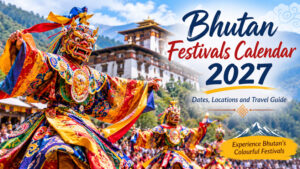
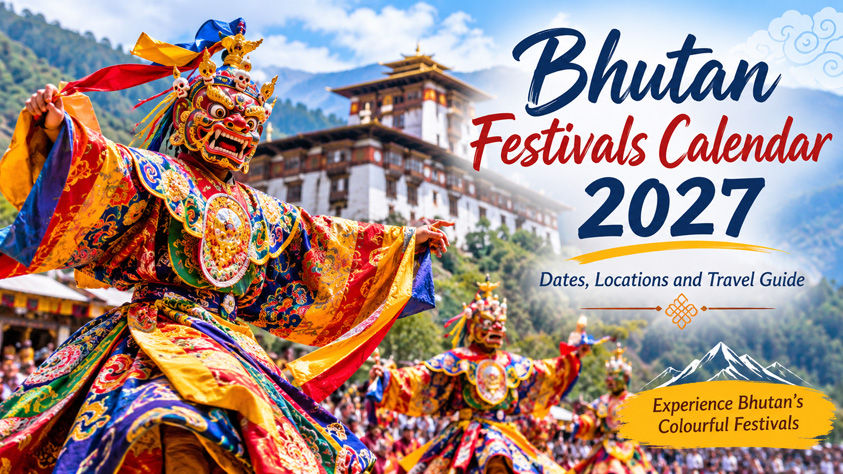
The main attraction is the traditional masked dances, known as Cham, performed by monks and local dancers wearing elaborate costumes and colourful masks. Each dance has a religious meaning and represents stories from Buddhist teachings, spiritual legends and the lives of enlightened beings.
Some festivals also feature the unveiling of a giant silk appliqué religious painting, known as a Thongdrel. Displayed on the final morning of certain festivals, these sacred images are believed to bestow blessings on those who view them.
Bhutanese festivals are not only religious occasions but also important social and cultural gatherings. Families and communities travel from surrounding villages, dressed in their finest traditional clothes, often accompanied by colourful jewellery and picnic baskets. The festival grounds become lively meeting places where people reconnect, celebrate their traditions and pass their cultural heritage to younger generations.
For visitors, attending a Tshechu is an excellent way to experience Bhutan beyond its beautiful landscapes and monasteries.
Most Popular Festivals in Bhutan
Among the many festivals celebrated across Bhutan, Paro Tshechu and Thimphu Tshechu attract some of the largest numbers of local and international visitors.
Both festivals are held in western Bhutan and are relatively accessible from Paro International Airport. They also take place during spring and autumn, two particularly attractive seasons for travelling in Bhutan.
Paro Tshechu
Paro Tshechu is one of Bhutan’s most famous religious festivals, held at the historic Rinpung Dzong in Paro. The celebration features spectacular masked dances, traditional music and religious performances by monks and local dancers.
One of the highlights is the early-morning unveiling of the giant Thongdrel, a sacred religious painting displayed on the final day. Thousands of devotees gather to receive blessings and witness this important ceremony.
The festival is an excellent choice for first-time visitors who want to experience Bhutanese culture and religious traditions.
Thimphu Tshechu
Thimphu Tshechu is another major cultural event, held at Tashichho Dzong in Bhutan’s capital. It attracts large crowds from different parts of the country, creating a lively atmosphere filled with traditional dress, music, masked dances and religious ceremonies.
It offers visitors an opportunity to observe Bhutanese customs and social life while enjoying some of the country’s most significant cultural performances.
Why Visit Smaller Bhutanese Festivals?
Although Paro and Thimphu Tshechus are the most widely known, smaller regional festivals can offer a more intimate experience. They are often attended mainly by local communities and provide visitors with opportunities to observe traditional customs away from the larger crowds.
Some of the festivals worth considering include Punakha Tshechu, Talo Tshechu, Ura Yakchoe, Gomphukora and the Royal Highland Festival.
Bhutan Festivals We Recommend
If you have additional time in Bhutan or prefer exploring beyond the main tourist destinations, consider including one of these distinctive festivals in your itinerary.
Royal Highland Festival – Laya
The Royal Highland Festival is a unique cultural celebration held in the remote highland settlement of Laya, at an elevation of approximately 4,000 metres. Initiated by His Majesty the King and first celebrated in October 2016, the festival showcases the traditional lifestyle, culture and heritage of Bhutan’s highland communities.
Visitors can meet local people from Laya and surrounding villages, learn about their nomadic traditions, experience highland food and explore the spectacular mountain landscape. Traditional tents set up by local communities provide a distinctive accommodation experience.
For travellers interested in remote destinations, mountain culture and authentic community encounters, this festival offers something quite different from the usual Bhutan sightseeing experience.
Punakha Tshechu
Punakha Tshechu takes place at the magnificent Punakha Dzong, one of Bhutan’s most impressive historical fortresses. The festival includes religious masked dances and dramatic performances depicting historical events associated with Zhabdrung Ngawang Namgyal and the defence of Bhutan.
The combination of traditional performances and the beautiful setting of Punakha Dzong makes this festival particularly appealing. It is also a pleasant time to explore the Punakha Valley and its surrounding countryside.
Druk Wangyel Tshechu
Druk Wangyel Tshechu is a distinctive one-day festival held at Dochula Pass on 13 December each year. Unlike most Bhutanese Tshechus, which are traditionally performed by monks, this festival features performances by members of the Royal Bhutan Army.
The celebration commemorates the 2003 military operation in southern Bhutan and honours those who took part. Set against the panoramic Himalayan scenery of Dochula Pass, the festival offers a different perspective on Bhutan’s cultural and national heritage.
Talo Tshechu
Talo Tshechu is a smaller and more intimate village festival celebrated in Talo, in the Punakha region. It attracts local residents from surrounding communities and offers a wonderful opportunity to experience traditional Bhutanese culture in a relaxed setting.
Its relatively accessible location makes it an interesting addition to a cultural tour of western Bhutan.
Bhutan Festivals Calendar 2027
The following calendar lists the scheduled dates and locations of major festivals and cultural events in Bhutan for 2027. It includes celebrations across western, central and eastern Bhutan.
Festival dates are based on the available 2027 calendar and may be subject to changes or confirmation by the relevant local authorities. Travellers should reconfirm dates before finalising their travel arrangements.
| Festival | Location | Start date | End date |
| Lhamoi Dromchhen | Trongsa | 11 Feb | 13 Feb |
| Punakha Dromchoe | Punakha | 13 Feb | 15 Feb |
| Punakha Tshechu | Punakha | 16 Feb | 18 Feb |
| Tharpaling Thongdrol | Bumthang | 20 Feb | — |
| Chhorten Kora | Trashi Yangtse | 20 Feb | — |
| Tangsibi Mani | Bumthang | 22 Feb | 24 Feb |
| Chhorten Kora | Trashi Yangtse | 08 Mar | — |
| Gomphukora | Trashi Yangtse | 16 Mar | 18 Mar |
| Talo Tshechu | Punakha | 16 Mar | 18 Mar |
| Gasa Tshechu | Gasa | 16 Mar | 18 Mar |
| Zhemgang Tshechu | Zhemgang | 16 Mar | 18 Mar |
| Paro Tshechu | Paro | 18 Mar | 22 Mar |
| Rhododendron Week | Trashigang | 03 Apr | 09 Apr |
| Domkhar Tshechu | Bumthang | 16 Apr | 18 Apr |
| Ura Yakchoe | Bumthang | 18 Apr | 22 Apr |
| Rhododendron Festival | Thimphu | 22 Apr | 23 Apr |
| Nimalung Tshechu | Bumthang | 12 Jun | 14 Jun |
| Kurjey Tshechu | Bumthang | 14 Jun | — |
| Tour of the Dragon (Mountain Bike Race) | Bumthang | 05 Sep | — |
| Thimphu Drubchen | Thimphu | 05 Oct | — |
| Wangdue Tshechu | Wangdue Phodrang | 08 Oct | 10 Oct |
| Tamshing Phala Chhoepa | Bumthang | 10 Oct | 12 Oct |
| Thimphu Tshechu | Thimphu | 10 Oct | 12 Oct |
| Gangtey Tshechu | Wangdue Phodrang | 13 Oct | 15 Oct |
| Jhomolhari Mountain Festival | Thimphu | 14 Oct | 15 Oct |
| Thangbi Mewang | Bumthang | 15 Oct | 16 Oct |
| Royal Highland Festival | Gasa | 23 Oct | 24 Oct |
| Jakar Tshechu | Bumthang | 06 Nov | 09 Nov |
| Pemagatshel Tshechu | Pemagatshel | 06 Nov | 09 Nov |
| Haa Tshechu | Haa Valley | 06 Nov | 08 Nov |
| Chhukha Tshechu | Chhukha | 06 Nov | 08 Nov |
| Dechenphu Tshechu | Thimphu | 08 Nov | — |
| Black-Necked Crane Festival | Wangdue Phodrang | 11 Nov | — |
| Jambay Lhakhang Drup | Bumthang | 14 Nov | 17 Nov |
| Prakhar Duchhoed | Bumthang | 15 Nov | 17 Nov |
| Goenpai Drupchen | Trongsa | 03 Dec | 05 Dec |
| Mongar Tshechu | Mongar | 06 Dec | 08 Dec |
| Phuntsholing Tshechu | Chhukha | 06 Dec | 08 Dec |
| Trashigang Tshechu | Trashigang | 07 Dec | 09 Dec |
| Jambay Lhakhang Singye Cham | Bumthang | 13 Dec | — |
| Nalakhar Tshechu | Bumthang | 13 Dec | 15 Dec |
| Druk Wangyel Tshechu | Thimphu | 13 Dec | — |
Note: Dates are reproduced from the supplied 2027 calendar. A dash indicates that an end date was not provided in the source.
What If You Cannot Attend a Festival?
If your travel dates do not coincide with a festival, you can still discover many aspects of Bhutanese religious and cultural traditions.
In the weeks leading up to a Tshechu, monks spend considerable time preparing for the celebrations through prayer, meditation, rehearsals and the preparation of ceremonial materials. Visiting a monastery or dzong during this period may provide an opportunity to observe some of these preparations.
With the assistance of a local guide, you may also learn about the meanings behind the masks, costumes, religious dances and traditional rituals. These experiences can offer a deeper understanding of Bhutan’s spiritual heritage, even when no festival is taking place.
Planning Your Bhutan Festival Tour in 2027
Attending a Bhutanese festival requires a little advance planning, particularly if you wish to visit during the popular Paro or Thimphu Tshechu periods.
We recommend arranging your trip around four to six months in advance, especially for major festivals. Hotels, experienced guides and flight seats can become limited during peak festival dates.
When planning your journey, consider the following:
Experience Bhutan’s Festivals with Adventure Trail Nepal
A Bhutan festival tour is an opportunity to experience the country’s living traditions, spiritual heritage and warm hospitality. Whether you want to witness the spectacular Paro Tshechu, explore the cultural atmosphere of Thimphu, visit the historic Punakha Dzong or discover the remote highland communities of Laya, we can help you plan a memorable journey.
Adventure Trail Nepal organises tailor-made private tours to Bhutan, combining festival experiences with cultural sightseeing, monasteries, traditional villages and scenic Himalayan landscapes.
Contact our team to plan your Bhutan Festival Tour 2027. We can help you choose the right festival, arrange accommodation and transport, and prepare an itinerary that suits your travel dates and interests.
Bhutanese Tshechus are traditional Buddhist festivals celebrated at monasteries, temples and dzongs throughout the country. They honour Guru Rinpoche (Padmasambhava), who introduced Buddhism to Bhutan in the 8th century. The celebrations feature sacred masked dances, religious rituals, blessings and traditional performances.
Planning your Bhutan holiday around a festival allows you to experience the country’s living culture and religious traditions. You can witness colourful masked dances, see local people dressed in traditional clothing, and experience the lively atmosphere of communities gathering for important religious celebrations.
Most major Bhutanese Tshechus last between three and five days. However, smaller regional celebrations may last one or two days. Each day features different masked dances, religious performances and rituals.
Yes. Bhutanese festivals follow the traditional lunar calendar, so their dates change each year according to the Bhutanese calendar and religious astrology. It is advisable to check the latest official schedule before booking your trip.
Paro Tshechu, Thimphu Tshechu and Punakha Tshechu are excellent choices for first-time visitors. These festivals are relatively accessible and offer impressive religious performances, colourful traditional costumes and opportunities to experience Bhutanese culture.
We recommend booking four to six months in advance, particularly for popular festivals such as Paro Tshechu and Thimphu Tshechu. Early booking helps secure preferred hotels, experienced guides and available flights.
Visitors should dress modestly and respectfully. Clothing that covers the shoulders and knees is recommended, particularly when visiting monasteries and dzongs. Comfortable walking shoes and warm layers are also useful, especially for early-morning ceremonies.
Yes. International visitors are welcome to attend Bhutanese festivals. These celebrations provide an opportunity to observe traditional dances, religious ceremonies and local community life. Visitors should respect religious customs and follow their guide’s instructions.
No separate festival permit is generally required. However, international visitors must complete the applicable Bhutan travel and immigration formalities. A licensed local tour operator can assist with the necessary arrangements.
A typical festival includes Cham dances performed by monks and local dancers wearing elaborate masks and costumes. There are also religious rituals, blessings, traditional music and appearances by Atsaras, colourful masked figures who entertain the audience. Some festivals conclude with the unveiling of a sacred Thongdrel.
Smaller regional festivals such as Ura Yakchoe, Talo Tshechu, Gomphukora and Gangtey Tshechu offer opportunities to experience local traditions in a more intimate atmosphere. The Royal Highland Festival is another distinctive event, showcasing the lifestyle and culture of Bhutan’s highland communities.
Yes. Depending on the festival dates and your available travel time, it may be possible to include two or more festivals in one itinerary. This is particularly convenient when festivals take place in nearby regions. However, festivals in central and eastern Bhutan may require additional travel days.