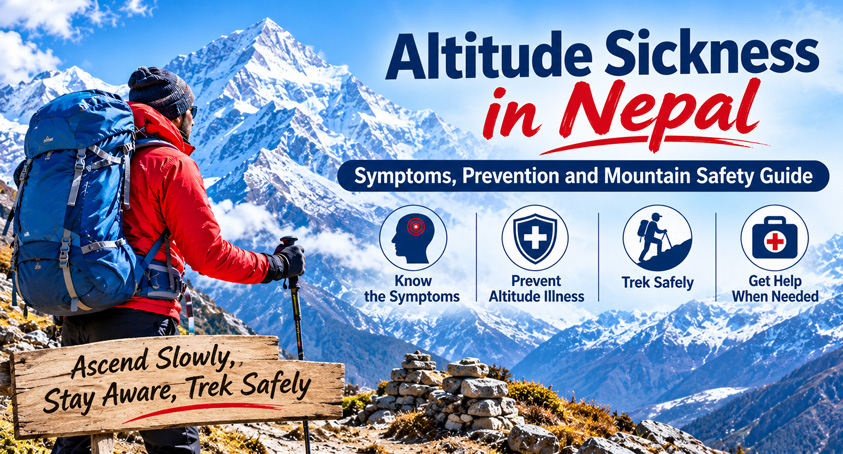
Understanding Altitude Sickness Before Trekking in the Himalayas
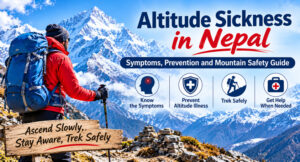
Trekking in the Himalayas is an unforgettable experience, offering spectacular mountain scenery, remote villages, beautiful landscapes and unique cultural encounters. However, travelling to high-altitude destinations also comes with health and safety challenges. One of the most important risks trekkers and mountaineers should understand before heading into the mountains is Acute Mountain Sickness (AMS), commonly known as altitude sickness.
Altitude sickness can affect anyone, regardless of age, fitness level or previous trekking experience. It occurs when the body does not have enough time to adjust to the reduced oxygen levels at higher elevations. Without proper acclimatisation and timely treatment, mild symptoms can develop into serious, potentially life-threatening conditions.
Whether you are planning to trek to Everest Base Camp, explore the Annapurna region, cross Thorong La Pass or climb a Himalayan peak, understanding altitude sickness and following basic mountain safety guidelines are essential.
At Adventure Trail Nepal, we encourage all trekkers to understand the risks of high-altitude travel, follow a responsible acclimatisation schedule and listen to their bodies throughout the journey.
Acute Mountain Sickness (AMS) is a condition that can develop when someone ascends to a higher altitude faster than their body can adjust to the reduced oxygen availability.
The risk of altitude sickness generally increases when travelling above 2,500 metres (8,200 feet), although individual susceptibility varies. Symptoms commonly develop within a few hours of reaching a higher elevation, particularly after the first night.
People who are physically fit are not necessarily protected from altitude sickness. Even experienced trekkers, climbers and athletes can develop AMS if they ascend too quickly.
The best way to reduce the risk is to ascend gradually, allow enough time for acclimatisation and avoid increasing sleeping altitude when experiencing symptoms.
Recognising the early signs of AMS is important because taking action at the right time can prevent the condition from becoming more serious.
Common symptoms include:
A headache accompanied by nausea, dizziness, fatigue or loss of appetite after ascending to a higher altitude should be treated as possible AMS.
If you feel unwell above 2,500 metres, do not ignore the symptoms or assume they are simply caused by physical exhaustion.
If you experience symptoms of altitude sickness while trekking, take them seriously and inform your trekking guide or group immediately.
Follow these basic precautions:
Do not continue climbing simply because the next destination is close or because you have a fixed trekking schedule.
If symptoms completely resolve, further ascent should only be considered cautiously, following appropriate acclimatisation and medical advice. Never use medication to mask symptoms and continue climbing.
Medication and Acetazolamide (Diamox)
Acetazolamide, commonly sold under the brand name Diamox, is a medication used to help prevent and treat AMS. It works by helping the body adjust more quickly to high-altitude conditions.
However, it is not a substitute for gradual ascent, proper acclimatisation or descent when necessary.
The appropriate dosage depends on whether it is being used for prevention or treatment, as well as individual medical circumstances. Consult a qualified healthcare professional before your trek about whether Diamox is appropriate for you, its correct dosage, possible side effects and precautions.
Never start or change medication without appropriate medical advice.
Mild AMS can sometimes progress into two serious altitude-related conditions:
Both conditions are medical emergencies and can become life-threatening without immediate treatment.
Warning Signs of HACE
Watch for the following symptoms:
Difficulty walking in a straight line, particularly in someone already experiencing altitude sickness, is a major warning sign of HACE.
Warning Signs of HAPE
Symptoms of High Altitude Pulmonary Edema include:
What to Do in an Emergency
DESCEND! DESCEND! DESCEND!
If HACE or HAPE is suspected:
A person with suspected HACE or HAPE should not continue trekking or attempt to walk unaided if they are severely unwell. Arrange appropriate assistance and evacuation.
In remote mountain areas, weather, terrain and distance from medical facilities can make rescue difficult. Early recognition and prompt action are therefore essential.
Prevention is always better than treatment. The most effective way to reduce the risk of AMS is to allow your body enough time to acclimatise.
Follow these important precautions when trekking in Nepal:
Ascend Slowly and Gradually
Avoid gaining too much altitude too quickly. Plan your trekking itinerary with sufficient time for acclimatisation, especially when travelling above 3,000 metres.
Follow Recommended Sleeping Altitude Guidelines
Once above 3,000 metres, a commonly recommended guideline is to increase your sleeping altitude by no more than approximately 300–500 metres per day.
If your itinerary requires a larger increase, include additional acclimatisation time.
Include Acclimatisation Days
Plan a rest or acclimatisation day after gaining approximately 1,000 metres in sleeping altitude, or more frequently when necessary.
An acclimatisation day does not necessarily mean staying indoors all day. You may take a gentle walk to a higher elevation during the day, provided you return to sleep at the same altitude.
Drink Sufficient Water
Maintain adequate fluid intake throughout the trek. Dehydration can make you feel worse and may complicate the assessment of altitude-related symptoms.
Avoid excessive alcohol consumption, particularly during the initial days at high altitude.
Eat Properly and Get Enough Rest
Maintain regular meals and eat enough carbohydrates to support your energy requirements. Allow sufficient time for sleep and recovery.
Listen to Your Body
Do not ignore headaches, nausea, unusual tiredness or dizziness. Inform your guide immediately if you experience any symptoms.
Choose a Responsible Trekking Itinerary
A well-planned itinerary should allow enough time for gradual ascent, rest and acclimatisation. Avoid overly ambitious schedules that require rapid altitude gain.
Remember that no acclimatisation schedule can completely eliminate the risk of altitude sickness. People respond differently to high-altitude conditions.
Besides altitude sickness, Himalayan trekking involves other environmental and physical challenges. Preparation and awareness can make your journey safer and more enjoyable.
Before starting your trek, consider the following:
Most importantly, never compromise your safety to reach a particular destination or complete a trek within a fixed timeframe.
The Himalayan Rescue Association (HRA) is a voluntary, non-profit organisation established in 1973 with the objective of reducing casualties and promoting health and safety in the Himalayas of Nepal.
HRA plays an important role in educating trekkers, mountaineers and visitors about altitude sickness and other high-altitude health risks.
During the main trekking seasons of spring and autumn, HRA operates medical aid posts along two of Nepal’s most popular trekking routes:
Pheriche Aid Post – 4,250 metres
Located along the Everest Base Camp trekking route, the Pheriche medical aid post provides medical support and altitude-related information to trekkers and mountaineers travelling through the Everest region.
Manang Aid Post – 3,550 metres
Situated along the Annapurna Circuit, the Manang aid post provides medical assistance and advice to trekkers before they continue towards higher elevations, including Thorong La Pass.
Both aid posts are staffed by volunteer doctors during the main trekking seasons.
Daily Altitude Sickness Awareness Talks
HRA provides daily educational talks on altitude sickness at 3:00 PM during the spring and autumn trekking seasons.
These talks are traditionally held at:
Trekkers travelling through these areas are encouraged to attend the talks to learn about altitude sickness, its symptoms, prevention and emergency response.
Please check with HRA for the latest operating schedule and availability before planning your visit.
Everest ER Medical Clinic at Everest Base Camp
HRA has also operated the Everest ER medical clinic at Everest Base Camp (approximately 5,350 metres) since the spring trekking season of 2003.
Everest ER provides medical facilities and healthcare support to climbers, expedition support staff and visitors at Everest Base Camp.
Its presence is particularly valuable in one of the world’s most challenging high-altitude environments.
For further information about HRA, its medical services and altitude awareness programmes, visit:
Himalayan Rescue Association: https://himalayanrescue.org.np
Nepal offers some of the world’s most rewarding trekking and mountaineering experiences. From the legendary Everest Base Camp trail and the Annapurna Circuit to the peaceful valleys of Langtang and the remote landscapes of Mustang, the Himalayas have something special for every traveller.
However, a successful mountain adventure is not just about reaching a destination. It is also about making responsible decisions, respecting the mountain environment and prioritising health and safety throughout the journey.
At Adventure Trail Nepal, we believe that proper planning, experienced trekking guides, gradual acclimatisation and awareness of altitude-related risks are essential parts of a safe trekking experience.
Whether you are planning your first Himalayan trek or returning to Nepal for another mountain adventure, take the time to prepare properly, understand the risks and enjoy the mountains responsibly.
Your safety comes first. The mountains will always be there.