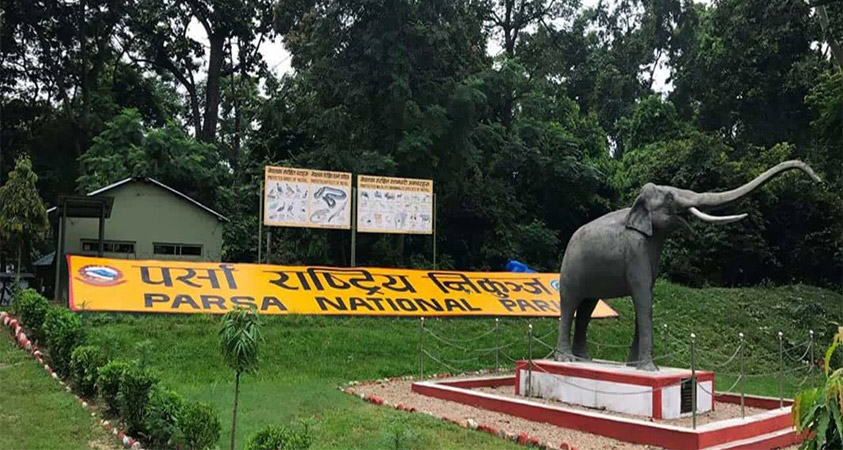
Parsa National Park Sees Surge in Tourism as Biodiversity and Infrastructure Gains Traction
Parsa National Park is witnessing a steady surge in tourism, driven by its rich biodiversity, improved infrastructure, and growing recognition as an emerging eco-tourism destination in Nepal. Since its official designation as Nepal’s 12th national park in 2074 BS, the park has gradually gained popularity among both domestic travelers and international nature enthusiasts.
Spanning 627.39 square kilometers across the districts of Parsa, Bara, and Makawanpur, the park offers a rare combination of untouched wilderness and cultural heritage. According to park officials, increasing visitor numbers reflect enhanced promotion efforts and ongoing development of tourism facilities.
Santosh Kumar Bhagat, the park’s information officer, stated that tourist arrivals have notably increased compared to previous years. While domestic visitors still make up the majority, international interest is also growing. In the first nine months of the current fiscal year (2082/83), the park recorded 413 visitors, including tourists from SAARC countries and beyond. On average, around 1,000 tourists visit the park annually.
Tourism is highly seasonal, with peak visitation occurring between Kartik and Chait. The park remains closed during the monsoon season (Baisakh to Asoj), resulting in a temporary decline in visitor activity.
A Haven of Biodiversity and Natural Beauty
One of the main attractions of Parsa National Park is its diverse ecosystem. The park is home to:
This rich biodiversity makes the park a prime destination for wildlife lovers, birdwatchers, and photographers.
In addition to its wildlife, the park also holds cultural and spiritual significance. Visitors can explore ancient Maya temples and the revered Dugdheshwor Mahadev Temple. Scenic wetlands such as Kamini Daha, Halkhoriya Daha, and Lauki Daha offer tranquil settings and picturesque landscapes ideal for nature exploration.
Local resident Subhash Budhathoki noted that the park’s lush greenery, panoramic views, and wildlife experiences—especially elephant safaris—continue to attract increasing numbers of tourists.
Conservation Success and Infrastructure Growth
Recent conservation initiatives have significantly improved the park’s ecosystem. The construction of artificial water ponds has enhanced water availability for wildlife, leading to increased sightings.
According to Park Chief Ramchandra Khatiwada, the leopard population has risen to 41, indicating a healthy and thriving habitat.
To accommodate growing tourism demand, the park has invested in infrastructure development, including:
These developments are making the park more accessible and enjoyable for visitors.
Visitor Information
Entry fees for Parsa National Park are:
Additional costs:
Future Outlook
With a clear focus on sustainable tourism, park authorities are planning further improvements in infrastructure and promotional strategies. The long-term goal is to position Parsa National Park as a leading tourist destination in Madhesh Province.
By balancing conservation efforts with responsible tourism growth, the park is emerging as a strong example of sustainable eco-tourism in Nepal.