The Kokhe Danda Trek is a newly explored and less traveled trekking route in Nepal’s Parbat district, offering an authentic Himalayan experience far from the busy trails. Situated at an elevation of 3,303 meters, Kokhe Danda stands even higher than Poon Hill, providing wider and more breathtaking mountain views.
From the summit, trekkers are rewarded with a 360 degree panorama of the majestic Annapurna and Dhaulagiri ranges, along with distant views of Manaslu and even Langtang peaks on clear days. The southern horizon reveals layers of rolling hills stretching endlessly, creating a stunning natural tapestry.
This Kokhe Danda trek is ideal for travelers seeking peace, cultural immersion, and raw natural beauty. Along the route, you’ll pass through charming Magar villages like Lespar, where you can experience traditional lifestyles, local hospitality, and homestay accommodations.
Unlike commercial trekking routes, Kokhe Danda trek remains untouched and tranquil, making it a perfect choice for those looking to explore Nepal’s hidden gems.
The Kokhe Danda Trek highlights
Spectacular panoramic views of Annapurna, Dhaulagiri, and Manaslu ranges
Stunning sunrise and sunset views from Kokhe Danda & Haljure
Experience authentic Magar culture and homestay lifestyle
Trek through lush rhododendron forests and serene landscapes
Explore an off-the-beaten-path trail with fewer crowds
Visit beautiful villages like Lespar, Banau, and Taprang
Enjoy a peaceful alternative to the popular Poon Hill Trek
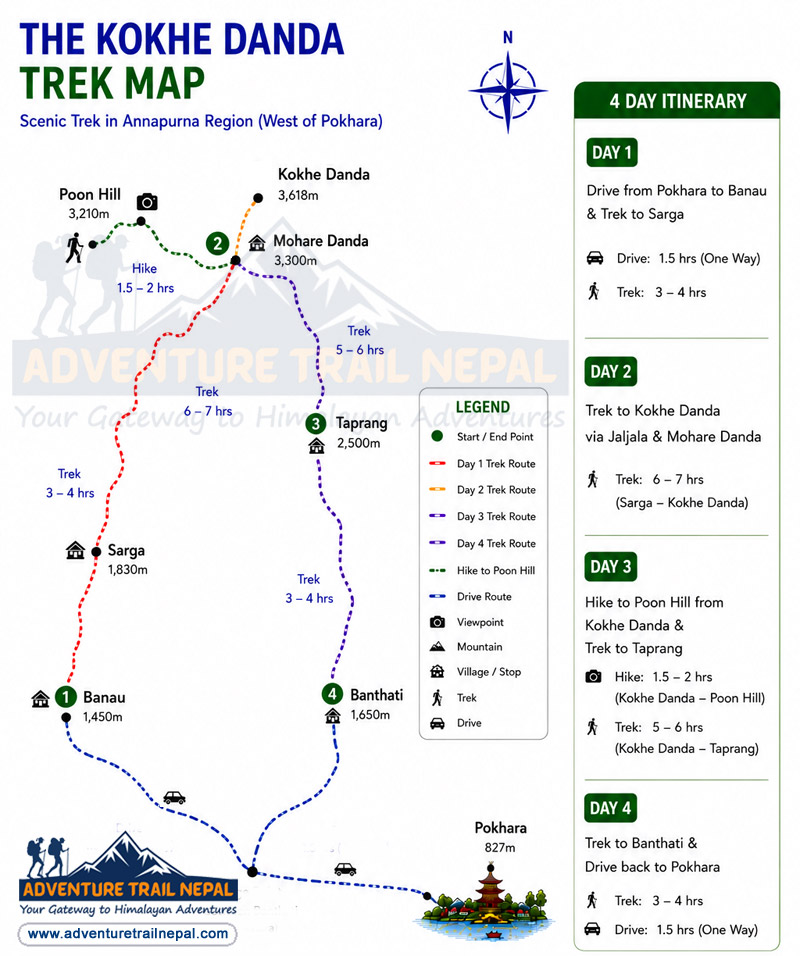
Your journey begins with a scenic drive from Pokhara to Banau via Kushma. From Banau, the trek starts with a gradual uphill walk toward Haljure, where you’ll stop for lunch while enjoying beautiful mountain views.
After lunch, continue trekking through forests and traditional villages to reach Sarga, passing through the charming Magar village of Lespar. Overnight at a local homestay.
Trek Duration: 5–6 hours
After breakfast, begin your ascent toward Dhima Danda, gaining significant elevation. The trail includes a short steep section before easing into a more gradual climb.
After lunch, continue through dense rhododendron forests and scenic ridges via Mohare Danda, eventually reaching Kokhe Danda. Enjoy breathtaking Himalayan views upon arrival. Overnight at a lodge.
Trek Duration: 5–6 hours
Wake up early to witness a spectacular sunrise over the Himalayas. After breakfast, take a scenic hike to Poon Hill, one of Nepal’s most famous viewpoints.
Enjoy panoramic views of Annapurna and Dhaulagiri before returning to Kokhe Danda for lunch. Later, descend through forest trails to reach Taprang village. Overnight stay at a local lodge.
Trek Duration: 1–2 hours
Drive Duration: 2.5 hours
After an early morning sunrise view, begin your descent to Banthati, a short and pleasant walk.
From Banthati, drive back to Pokhara, marking the end of your memorable Kokhe Danda adventure.
Are you interested in planning a custom trip with us? It’s quick, easy, and takes only 2 minutes.
What’s Included
Pick-up and drop-off in Pokhara.
Transport: Pokhara to Banau & return
Trekking permits and TIMS card
Licensed English-speaking trekking guide
Porter service (1 porter for 2 trekkers)
Accommodation in teahouses/homestays during the trek
All meals during trekking (Breakfast, Lunch, Dinner)
Government taxes and service charges
Basic first aid kit
What’s Not Included
International airfare
Nepal entry visa fees
Travel insurance (mandatory)
Extra accommodation/meals outside itinerary
Bottled drinks and alcoholic beverages
Personal expenses (laundry, internet, calls, etc.)
Tips for staff
Expenses due to unforeseen circumstances
Interested in this trip? Start planning your adventure today!
Additional Information
Equipment List for Kokhe Danda Trek
Proper equipment is essential for a comfortable and enjoyable Kokhe Danda Trek. The weather in the hills can change quickly, so we recommend packing lightweight, versatile clothing and reliable trekking gear.
Footwear
Lightweight hiking boots: Comfortable, supportive, and well broken-in hiking boots are recommended. Avoid wearing brand-new boots on the trek.
Trail running shoes: A good alternative for dry conditions. For rainy, wet, or snowy weather, choose waterproof or Gore-Tex footwear with good traction.
Trekking socks: Bring several pairs of comfortable, moisture-wicking socks to keep your feet dry.
Clothing
Shorts: Useful during warmer and lower-elevation sections.
Trekking pants: Lightweight, comfortable, and quick-drying pants are recommended.
T-shirts: Pack lightweight, breathable, and quick-drying T-shirts.
Long-sleeved shirt: Provides warmth and protection from the sun and insects.
Fleece jacket: A warm mid-layer for cooler mornings and evenings.
Rain jacket: A waterproof and breathable jacket is essential, especially during the monsoon or unpredictable mountain weather.
Down jacket: Recommended for colder conditions, particularly during early mornings, evenings, or winter treks.
Backpack & Essential Accessories
Backpack: A comfortable 30–35-liter backpack with a sturdy waist and chest strap is generally sufficient for the trek.
Sleeping bag: A warm sleeping bag is recommended, particularly for overnight stays in basic mountain accommodation or during colder seasons.
Water bottle: A 1-liter reusable water bottle is suitable. Water can usually be refilled or purchased along the trail; consider carrying a water purification method if needed.
Sunscreen: Use a good-quality, high-SPF sunscreen to protect your skin from strong mountain sunlight.
Sunglasses: UV-protection sunglasses are recommended to protect your eyes from bright sunlight.
Hat or cap: A sun hat or cap is useful for protection from the sun during daytime hiking.
Additional Useful Items
Headlamp or flashlight with spare batteries
Personal toiletries and hand sanitizer
Small first-aid kit and personal medications
Power bank
Trekking poles, especially if you prefer additional support on uphill and downhill sections
Lightweight rain cover for your backpack
Small dry bags or waterproof bags to protect electronics and important belongings
Tip: Pack light and carry only the essentials. The weather can vary considerably during the Kokhe Danda Trek, so layering your clothing is the best way to stay comfortable throughout the journey.
Photos
The Kokhe Danda Trek Map
FAQs - Frequently Asked Questions
How difficult is the Kokhe Danda Trek?
This trek is moderate in difficulty, suitable for beginners with a reasonable level of fitness.
Do I need a guide for this trek?
Yes, since it’s a new and less-marked trail, hiring a guide is highly recommended.
What type of accommodation is available?
You’ll stay in local homestays and basic lodges, offering an authentic cultural experience.
Is Kokhe Danda better than Poon Hill?
Kokhe Danda offers less crowded and more expansive views compared to Poon Hill, making it ideal for those seeking solitude.
What permits are required?
You’ll need:
TIMS Card
Annapurna Conservation Area Permit (ACAP)
Can I do this trek solo?
It’s possible but not recommended due to limited signage and remote trails.

What should I pack?
Warm clothing
Trekking boots
Rain gear
Water bottle
Sunscreen & sunglasses
Personal medications
get help from our travel specialist for holiday ideas
that match yout interest